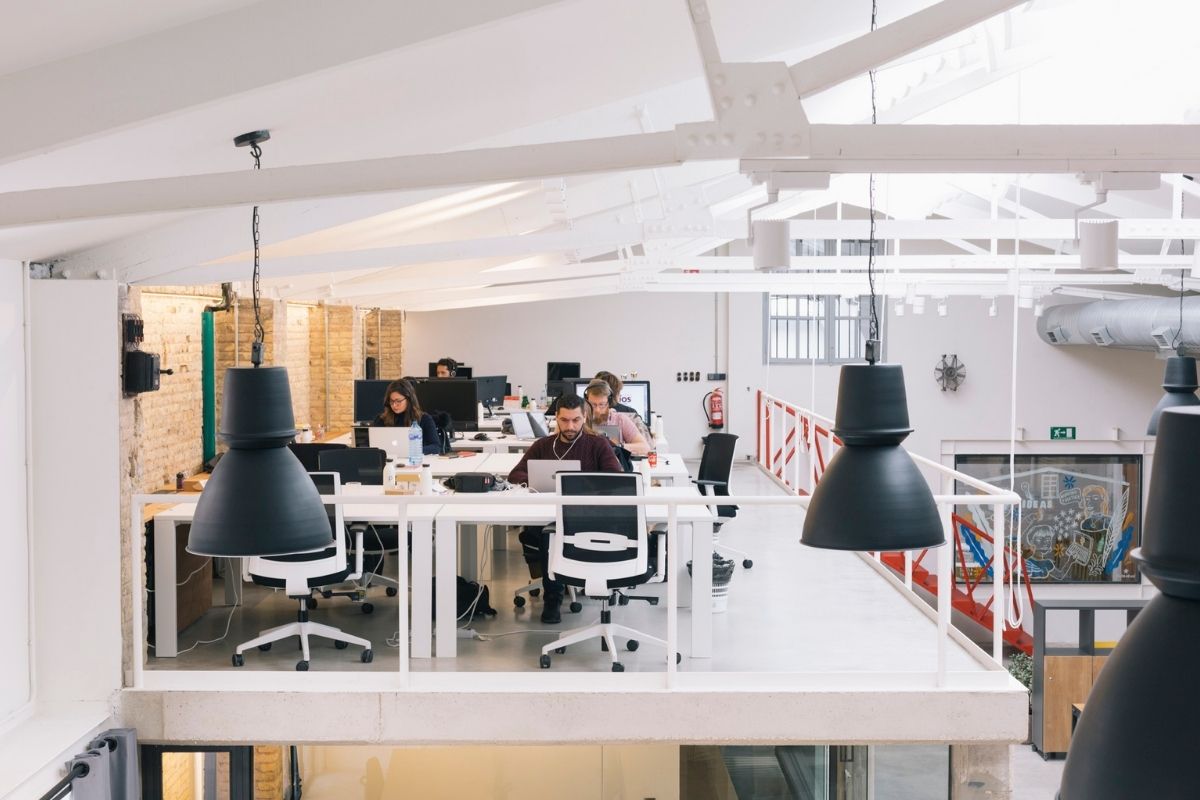
Office noise is one of those invisible factors that directly affects how we work, think and feel throughout the working day. Nearby conversations, phone calls, constant notifications, people moving around or background noise are all part of everyday life in many workplaces, especially in open-plan offices and coworking environments. When office noise is not properly managed, it can become a silent issue that reduces concentration, productivity and wellbeing—often without us even realising it.
What is noise and how does it appear in the workplace?
The Royal Spanish Academy defines noise as ‘an inarticulate sound, generally unpleasant’. In modern offices and coworking spaces, noise is amplified by the coexistence of different teams and activities.
In a working environment, several types of noise can be identified depending on their source:
- External noisecoming from traffic, construction work, sirens or urban activity. It filters indoors and can be constant in offices located in city centres.
- Building services noise: ventilation systems, air conditioning, lifts or technical equipment that generate continuous sounds which are sometimes difficult to isolate.
- Office equipment noise: computers, printers, photocopiers, keyboards or telephones, whose combined sounds raise noise levels without workers being fully aware of it.
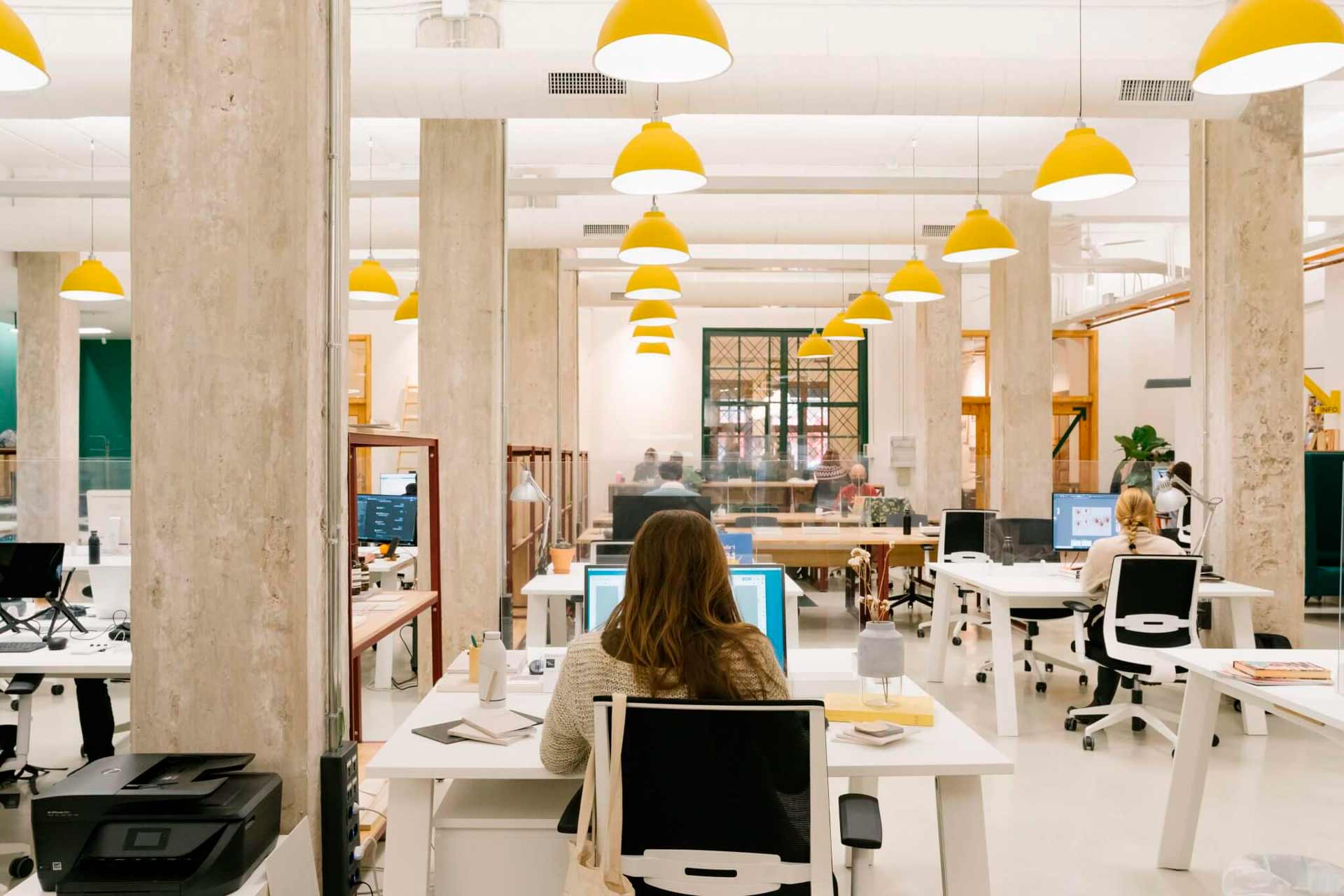
- People-generated noise:conversations, phone calls, impromptu meetings or movement around the space. This is the hardest type to control and, in open environments, its impact can be multiplied.
The real impact of office noise
Although many people claim to “get used to it”, studies show that office noise affects our ability to concentrate even when we believe it does not bother us. This often makes us less likely to take steps to reduce it.
Permissible noise levels in offices not only influence immediate productivity; they also affect concentration, increase stress and anxiety, and can even cause gradual hearing loss if exposure to disturbing sounds continues over time. According to the World Health Organization (WHO), the maximum recommended noise level to protect health and wellbeing is 65 dB.
Workers exposed to high noise levels experience greater difficulty maintaining focus, increased mental fatigue and reduced ability to make quick decisions.
Noise and comfort in coworking spaces
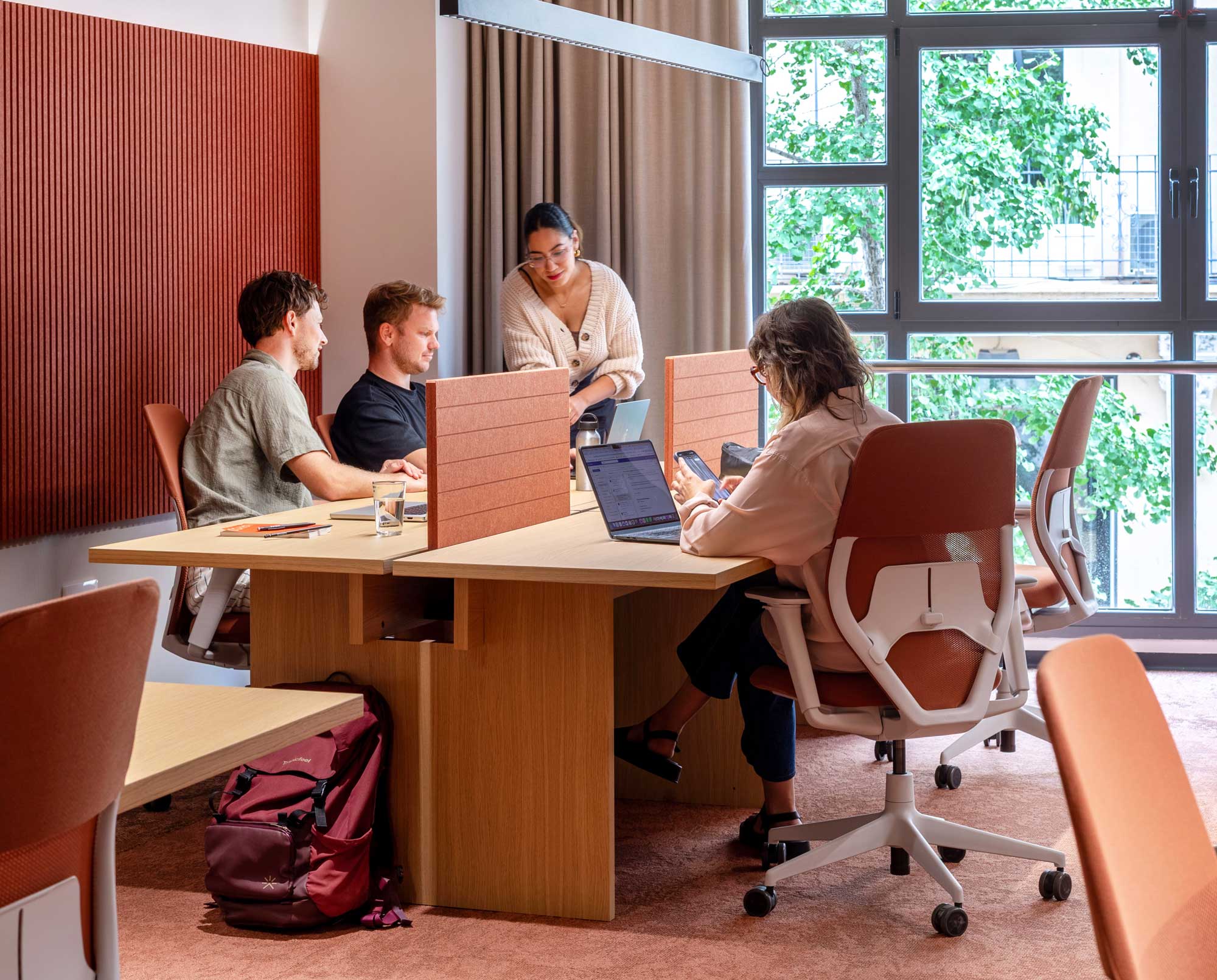
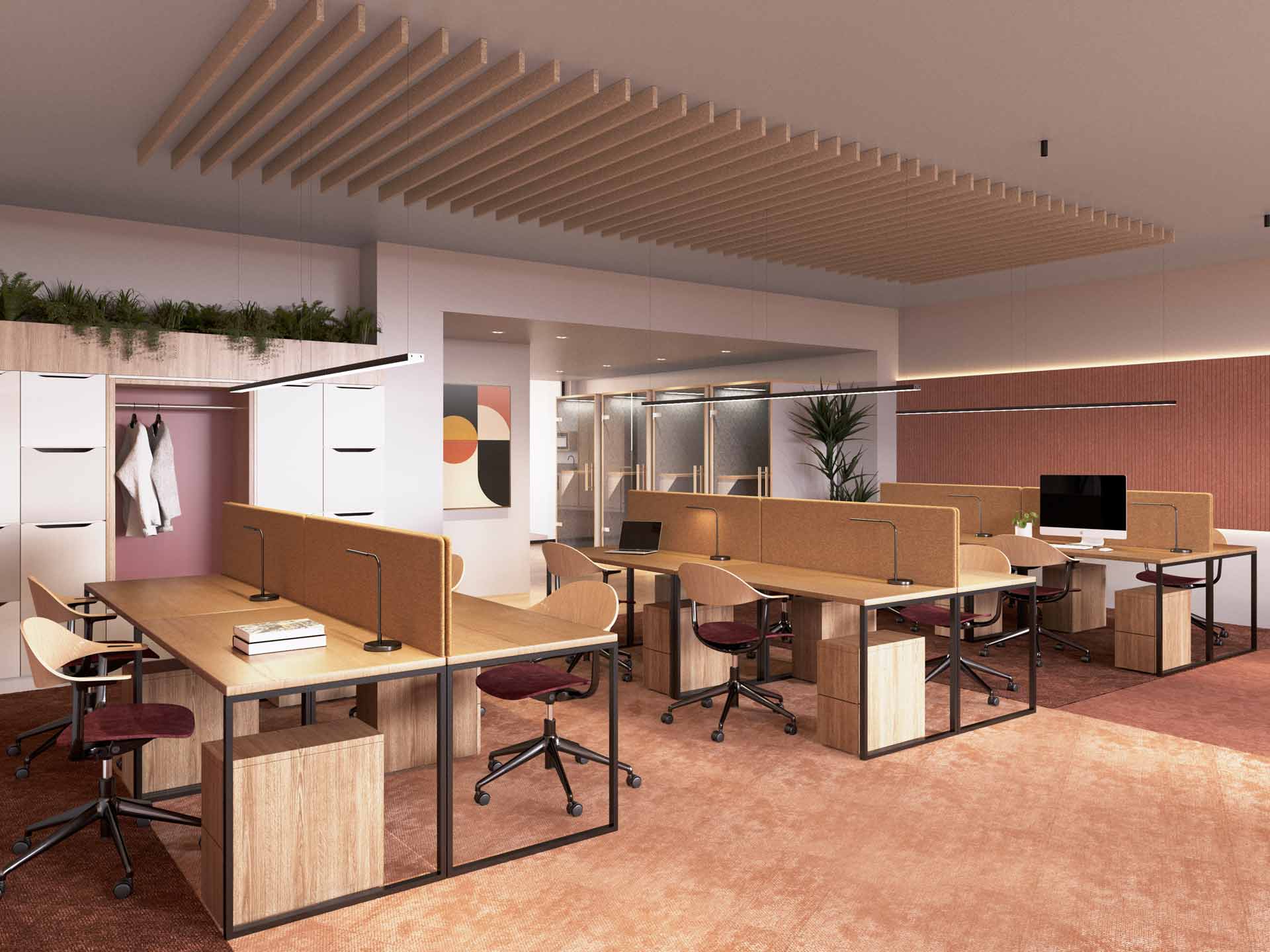
In places such as coworking spaces, noise management is even more critical.. These environments combine open areas, private rooms and shared zones where sound can easily multiply. A well-designed coworking space considers acoustic comfort as a key element: sound-absorbing materials, strategic zoning and furniture that reduces sound propagation help keep office noise within optimal levels.
At Wayco, for example, we offer spaces where community and collaboration coexist without compromising concentration. . Enclosed meeting rooms and phone booths allow teams to work efficiently while still benefiting from the dynamic atmosphere of a coworking space.. This shows that even in active, shared environments, it is possible to control decibel levels and respect recommended office noise limits, protecting both health and productivity.
Strategies for reducing office noise
Managing office noise does not mean eliminating it completely, but rather balancing it so that it does not interfere with productivity or wellbeing. Some of the most effective measures include:
- Acoustic design: sound-absorbing panels, partitions, carpets and materials that reduce reverberation.
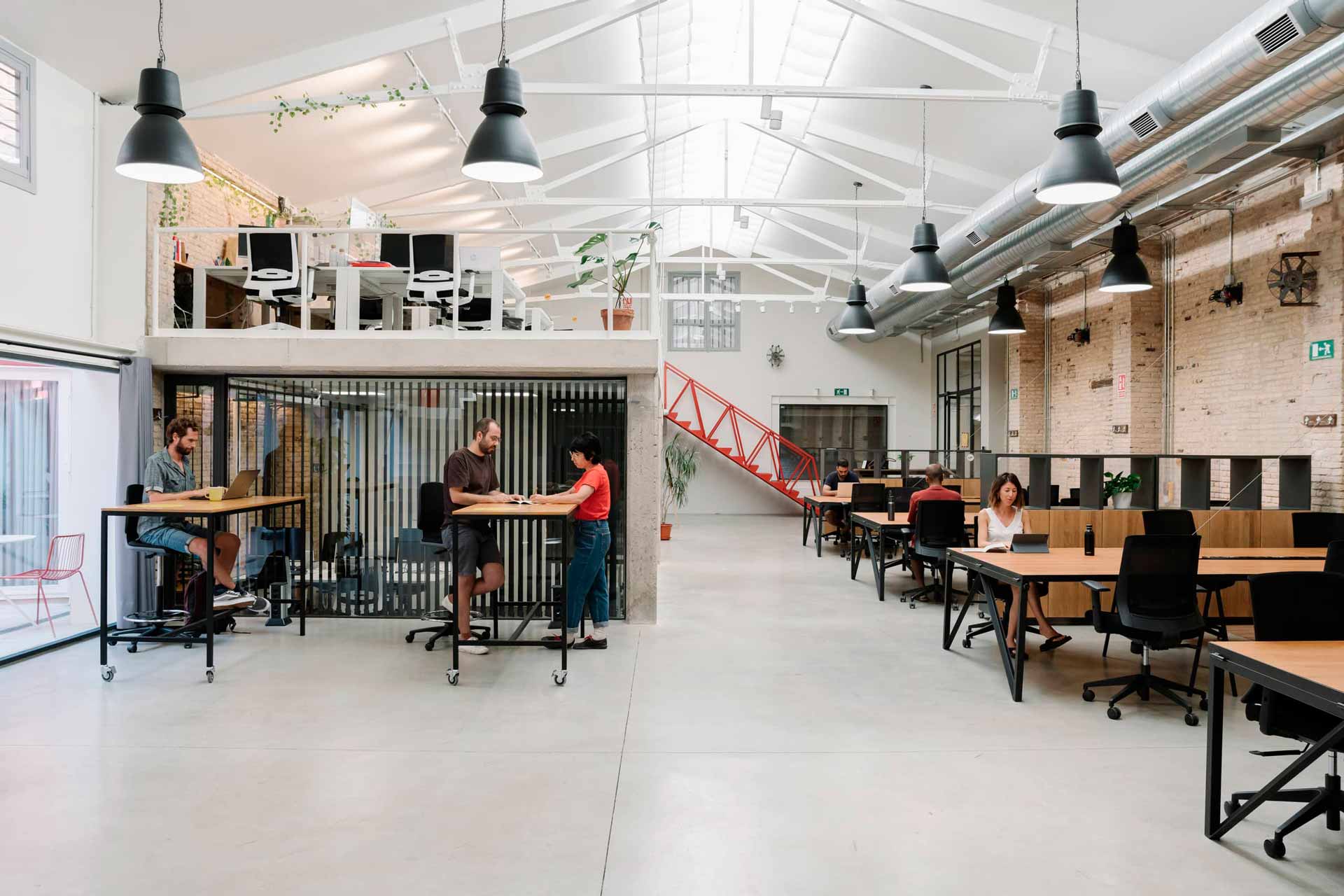
- Zoned spaces: open areas for collaborative work, private rooms for calls and meetings, and quiet corners for focused tasks.
- Mindful habits: encouraging discreet conversations, the use of headphones and shared acoustic etiquette.
In addition to general design and organisational strategies, each professional can apply individual measures to reduce exposure to office noise and maintain focus, especially in collaborative environments such as coworkings:
- Noise-cancelling headphones: help block conversations, calls and background noise, improving focus.
- Soft music or white noise: helps “mask” office noise levels and improves perceived comfort.
- Strategic choice of workspace: sitting away from walkways, meeting rooms or communal areas reduces exposure to high noise levels.
- Use of phone booths and private rooms: ideal for tasks requiring maximum concentration or important calls.
- Breaks and relaxation areas: alternating focused work with breaks in quieter zones helps reduce noise-related fatigue.
- Respectful communication: politely signalling when silence is needed contributes to a more balanced environment.
Wayco: offices for collaboration and concentration
Keeping office noise levels within recommended limits is essential for concentration, health and productivity.. In spaces such as Wayco, acoustic design and thoughtful zoning allow collaboration and community to thrive without compromising focus: Private rooms, phone booths, quiet zones and open areas with sound-absorbing materials ensure a balanced working environment.
Discover how a coworking space designed to manage office noise can improve your wellbeing and performance. Try a day at Wayco and experience a place where working and connecting flow in harmony.