Remote work in companies has gone from being an occasional alternative to becoming one of the major transformations of today’s working world. More and more organisations are embracing flexible models that allow teams to work remotely without losing productivity or connection.
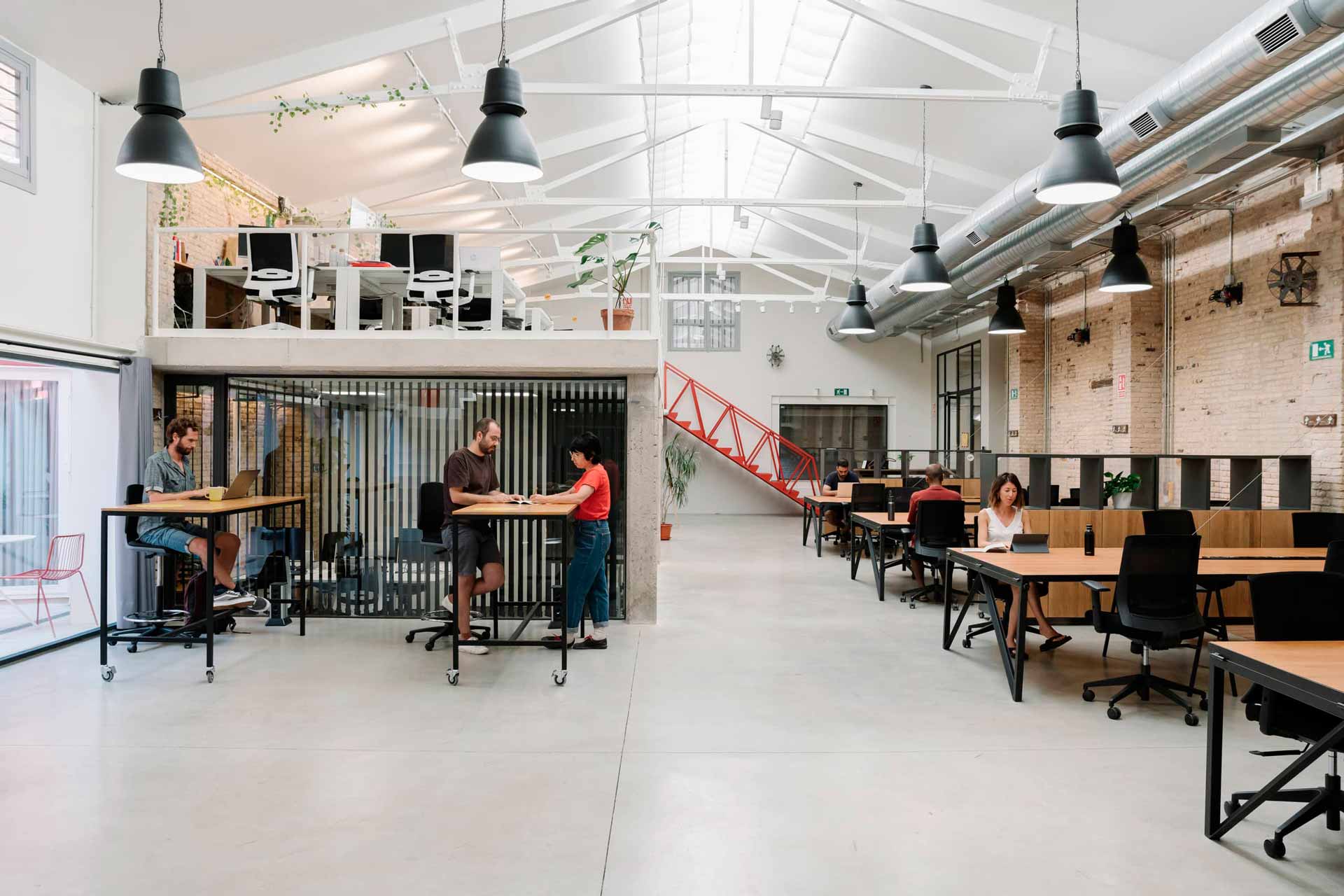
In cities like Valenciawhere innovation and entrepreneurship are thriving, remote work is increasingly combined with new ways of working, such as coworking spaces. Because yes: working remotely doesn’t have to mean working alone from home.
What Is Remote Work and When Is It Viable for a Company?
Remote work is a working arrangement in which people carry out their professional activity outside the traditional office, relying on digital tools to communicate, coordinate, and achieve goals.
Within remote work in companies, there are several models:
- Fully remote work, where the entire working day takes place outside the office
- Partial remote work, combining days at home with days on site
- Hybrid model, a flexible formula that adapts the workplace according to the team’s needs
This type of organisation works particularly well in companies with digitalised processes, roles that do not require constant physical presence, and a culture based on trust and autonomy.
Benefits of Remote Work for Companies
Implementing remote work can bring clear advantages for both the organisation and its team. Some of the key benefits include:
Increased productivity: Many people perform better when they can manage their time more freely and reduce daily commuting.
Lower operating costs: Less office space, fewer fixed expenses, and a more efficient structure.
Attracting and retaining talent: Flexibility has become one of the most valued factors for professionals. Offering remote work helps attract highly qualified profiles.
Improved wellbeing and work–life balance: A well-managed remote model can enhance quality of life and reduce stress.
Access to talent beyond Valencia: Remote work allows companies to hire professionals from other cities or even other countries, expanding growth opportunities.
Challenges and Drawbacks of Remote Work
Although remote work in companies offers many advantages, it also involves certain challenges that should be anticipated:
Managing teams at a distance: Coordinating tasks, maintaining motivation, and ensuring good communication require new dynamics and tools.
Feelings of isolation: Working exclusively from home can lead to social disconnection and a weaker sense of team belonging.
Technological or space limitations: Not all employees have an adequate environment or the necessary resources to work comfortably from home.
Difficulty switching off: When work happens at home, boundaries between work and personal life can easily blur. The key lies in combining flexibility with professional spaces and healthy routines that help maintain balance.
Legal Aspects and Spain’s Remote Work Law
In Spain, remote work is regulated by Law 10/2021 on remote working, which establishes a clear framework for companies and employees.
Some key points include:
- Remote work must be voluntary for both parties
- It is considered regular remote work if it accounts for at least 30% of working time
- A written agreement is mandatory
- The company must provide the necessary resources and compensate related expenses
- Employees retain the same labour rights as on-site workers, including the right to digital disconnection
Understanding this regulation is essential to implementing remote work in a safe and sustainable way.
Can You Work Remotely from Another Country?
One of the most common questions today is whether it’s possible to work remotely from another country. The answer is yes—but several factors need to be considered:
- International taxation, as you may create tax obligations outside Spain
- Social Security, depending on the country and length of stay
- Applicable labour legislation, which may vary according to place of residence
- Visas or specific permits, especially when working outside the EU
For this reason, before allowing an employee to work remotely from abroad, it’s advisable to seek legal advice and define a clear internal policy.
Coworking Spaces as Support for Remote Work in Companies
In this new landscape, coworking spaces have become a strategic solution for many companies.
Coworking helps companies to:
- Reduce costs without giving up a physical workspace
- Offer real flexibility to their teams
- Access meeting rooms when needed
- Maintain company culture and collaboration
- Work in an inspiring environment in the heart of Valencia
An ideal option for hybrid teams, startups, and growing companies.
The Future of Work Is Flexible
Remote work in companies is no longer a passing trend—it’s part of the present and the future. Organisations that adapt to hybrid, flexible, and people-centred models will gain a clear competitive advantage.
And if you’re looking for a way to work remotely without feeling isolated, while staying productive and connected to your team, coworking can be the perfect ally.
Discover Wayco’s spaces in Valencia and find a new way of working—more flexible, more human.