When we talk about how to be more productive at work, the same things tend to come up: the Pomodoro Technique, to-do lists, prioritising goals and the importance of avoiding distractions. And yes, all of these can help. But there’s another factor that often goes unnoticed and can make a real difference: the space we work in.
After all, preparing a presentation that requires complete concentration is very different from joining a video call with a client or coming up with new ideas with your team. Yet we often try to do everything from the same desk, surrounded by the same distractions and working in the same environment.
What if, instead of adapting every task to one single place, we adapted our workspace to what we need to do at any given moment?
Organising your working day around the different areas available can help improve productivity, make better use of your energy and reduce interruptions. You don’t need a revolutionary diary or to get up at five in the morning. Sometimes, the secret is simply knowing where to work.
Why Your Workspace Affects Your Productivity
Our surroundings have a direct influence on the way we work. Lighting, noise levels, comfort, furniture layout and even the movement of people around us can all affect our ability to concentrate and perform at our best.
Think about it: would you try to write a complex report in the middle of a conversation between colleagues? Or hold a team meeting in a corner where everyone else is trying to concentrate?
Probably not. And yet, it’s surprisingly common to tackle very different tasks from the same workstation.
The explanation is simple: not every activity requires the same conditions.
- Tasks that require attention and analysis call for a quiet environment with minimal distractions.
- Communicating with clients, suppliers or colleagues requires spaces where we can talk comfortably without disturbing others or feeling we’re being disturbed.
- Generating ideas, solving problems or working collaboratively can benefit from an open, relaxed and stimulating environment.
When we always work in the same place, regardless of what we need to get done, we can end up dealing with constant interruptions, repeatedly switching between tasks and wasting valuable time.
That’s why planning your working day isn’t just about deciding what you’re going to do and how much time to spend on it. It’s also about choosing where to do it.
Identify the Type of Task Before Choosing Where to Work
Before organising your diary, take a few minutes to review what you have on your to-do list. There’s no need to overcomplicate things: simply group your tasks according to the level of concentration or interaction they require.
We can divide them into three main categories:
- Deep-focus tasks
These are tasks that require sustained concentration and minimal interruptions. For example:
- Writing a report or article.
- Preparing a business proposal.
- Analysing data or results.
- Developing a strategy.
- Solving a complex problem.
- Working on an important presentation.
This is when you need to switch into focus mode. The fewer interruptions, the better.
- Communication and calls
These are activities that involve speaking, listening, sharing information or interacting with other people:
- Video calls with clients.
- Sales meetings.
- Phone calls.
- Team catch-ups.
- Project presentations.
Interviews
In this case, you need privacy, a reliable internet connection and an environment where you can talk comfortably.
- Creative tasks and brainstorming
These are activities where the aim isn’t so much to get things done as to explore possibilities, share perspectives and find new solutions:
- Brainstorming sessions.
- Planning meetings.
- Developing ideas for new projects.
- Team-building activities.
- Collaborative problem-solving.
- Reviewing goals and proposals.
For these activities, a change of scenery can be particularly useful. Stepping away from your desk, moving around and sharing ideas in a different environment can help break the routine and encourage new ways of thinking.
Once you’ve identified these three categories, organising your day becomes much easier. All you need to do is assign each task to the workspace that best meets its needs.
How to Make the Most of the Different Areas in Your Workspace
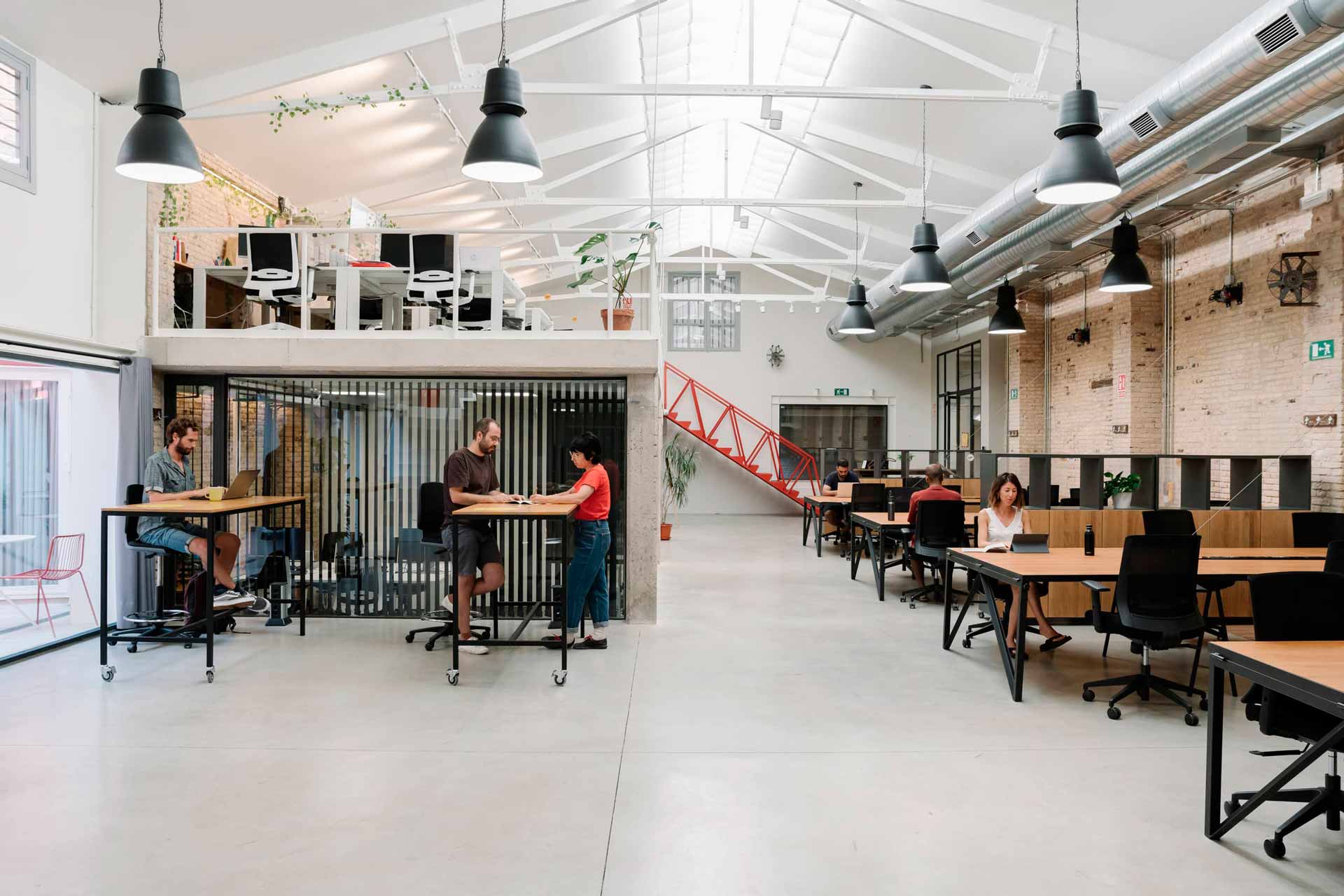
A well-designed workspace shouldn’t simply be a collection of desks, chairs and computers. It should offer different environments to meet the different needs that arise throughout the working day.
Let’s take a look at how to make the most of each one.
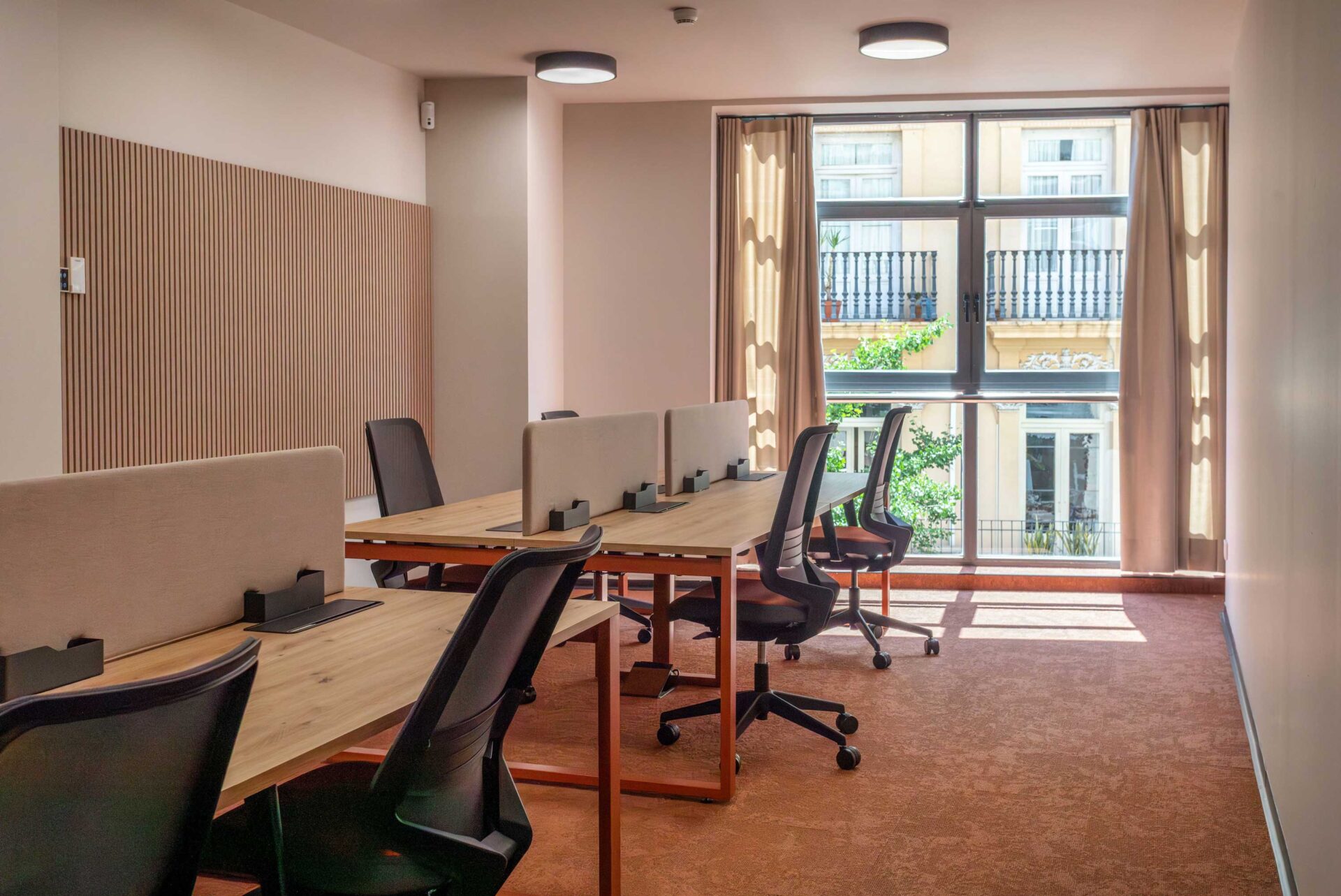
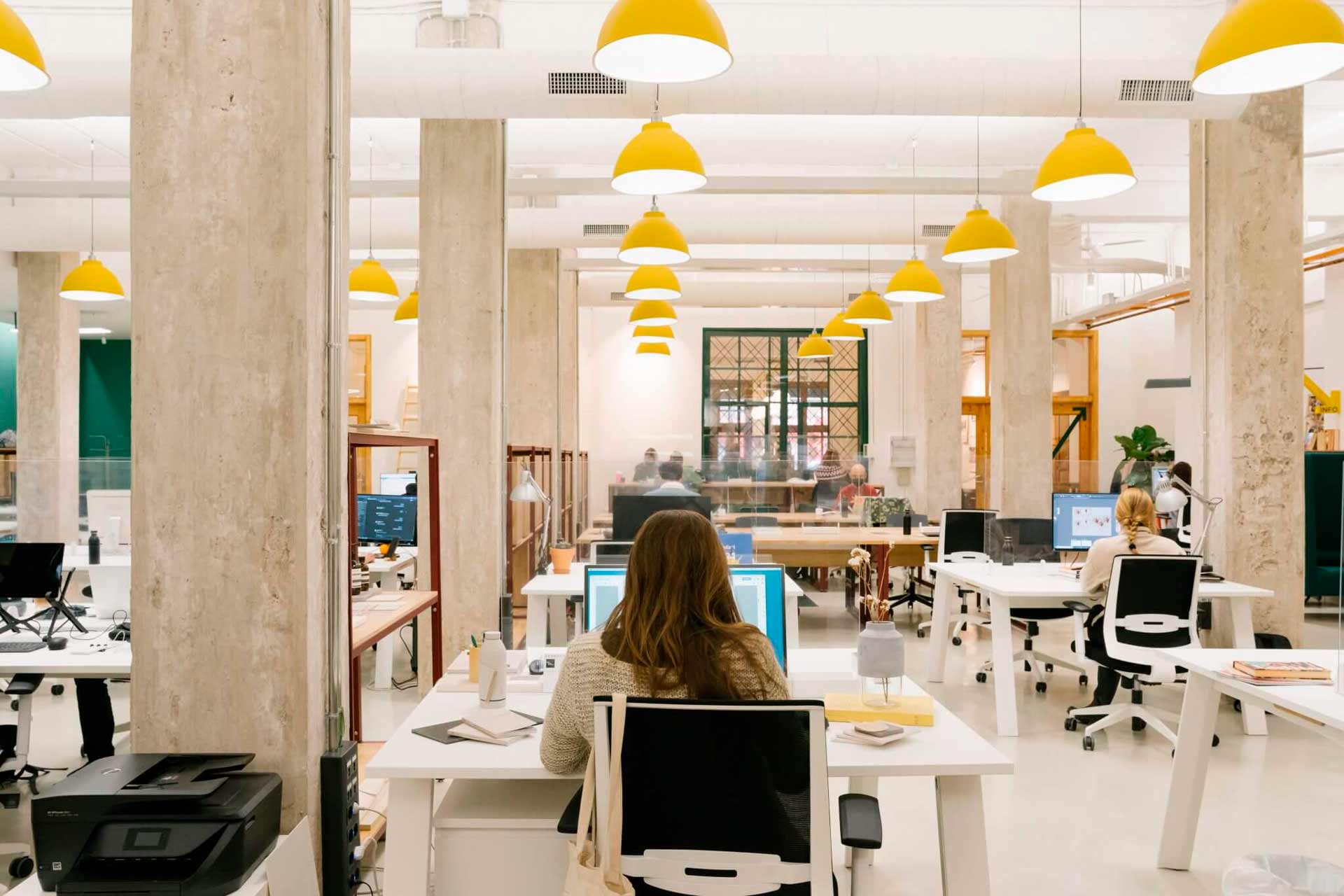
Quiet areas for deep-focus tasks
Some days, you need to disappear off the radar for a couple of hours. Not because you’re on holiday, but because you have a report to finish, a proposal to prepare or a problem that’s been going round in your head for far too long.
That’s when a quiet area becomes your best ally.
These spaces are designed to encourage concentration, minimise external distractions and prevent unnecessary interruptions. They’re ideal for practising what we know as deep work: periods of intense focus dedicated to tasks that require significant cognitive effort.
How can you make the most of them?
- Set aside the first few hours of the morning for your most demanding tasks, if that’s when your energy levels are at their highest.
- Group several concentration-heavy tasks into one block to avoid constantly switching between activities.
- Turn off notifications and keep your phone out of sight.
- Before sitting down, be clear about what you want to achieve during that period.
One tip: don’t turn the quiet area into an extension of your meeting schedule. If you need to make phone calls, constantly reply to messages or chat with a colleague, it might be better to move somewhere else.
Your concentration (and that of the people around you) will thank you for it.
Meeting rooms for calls and video conferences
Calls and meetings are part of almost every professional’s working day. The problem arises when we try to squeeze them into just any available corner.
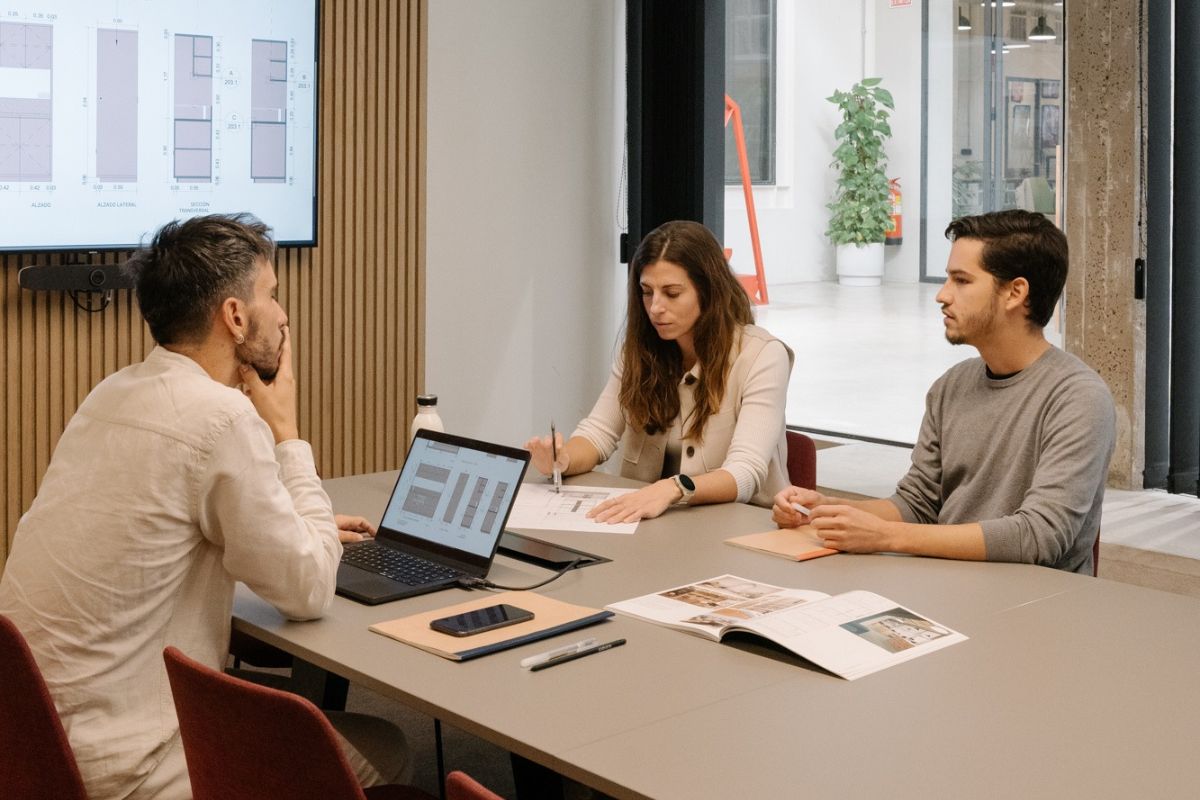
A video call with a client, a negotiation or an internal meeting requires more than just a good internet connection. It also calls for privacy, comfort and a suitable environment for communication.
Meeting rooms and individual phone booths allow you to keep these activities separate from the rest of the day’s work.
They’re particularly useful for:
- Having confidential conversations.
- Making video calls without background noise.
- Presenting proposals to clients.
- Holding follow-up meetings.
- Conducting job interviews.
- Coordinating tasks with other team members.
What’s more, having a room equipped with a screen, video-conferencing technology and comfortable furniture means you won’t waste the first ten minutes of every meeting trying to connect your laptop or find somewhere to put it.
It’s a small change that can make a big difference to the experience and help meetings run more smoothly.
And remember: if you have a fifteen-minute call, you don’t need to book a large meeting room for the whole morning. Make use of phone booths or designated spaces for one-to-one conversations.
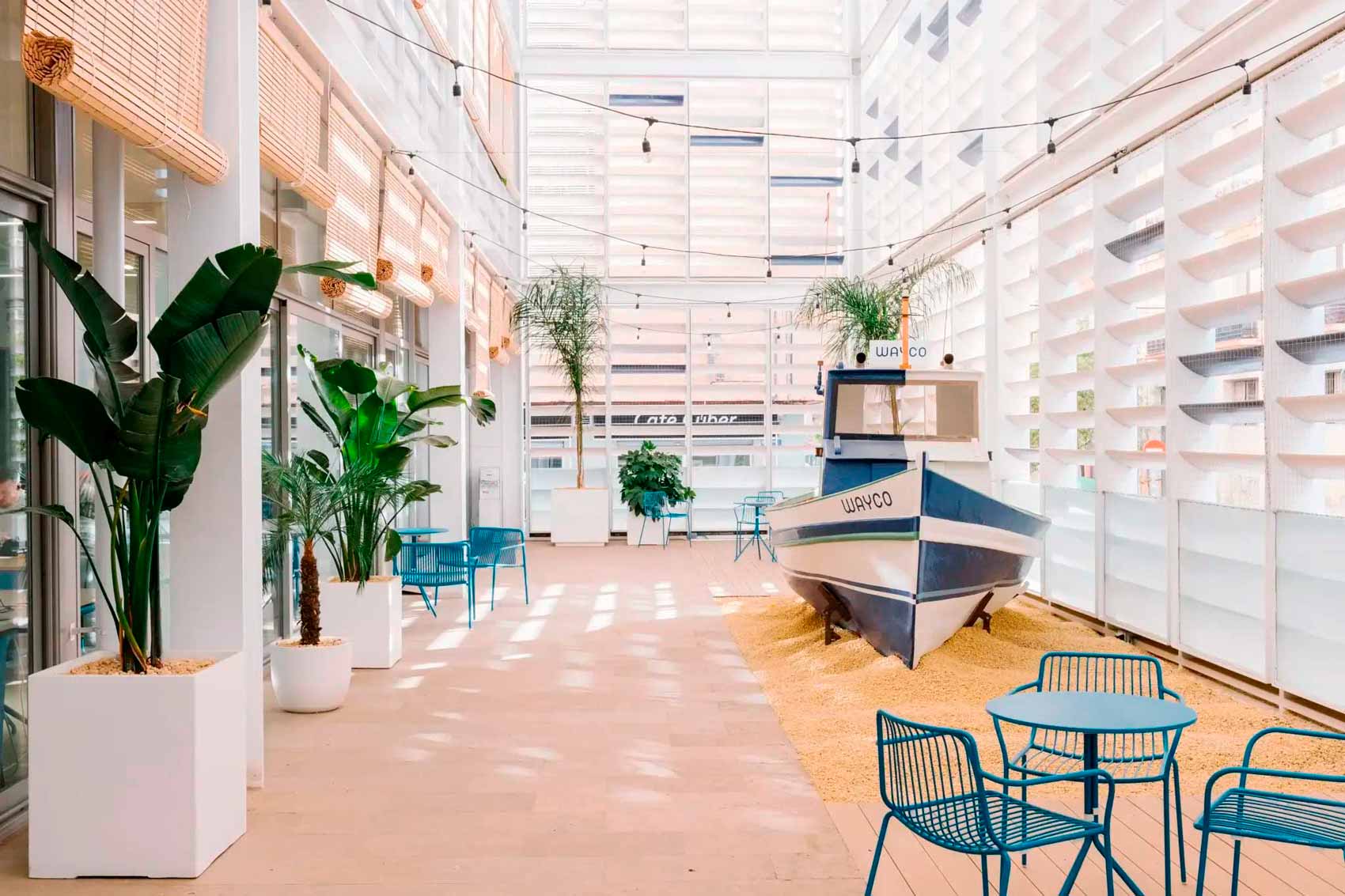
Terraces and open areas for brainstorming and creativity
Have you ever spent half an hour staring at a screen without making any progress, only to come up with the answer the moment you step out for a coffee?
It’s not magic. A change of scenery can help us break out of familiar patterns, reduce that feeling of being stuck and approach problems from a different perspective.
That’s why terraces and open areas are particularly useful for creative and collaborative tasks.
Stepping away from your usual desk allows you to change pace, have more spontaneous conversations and share ideas without the formality that sometimes comes with a traditional meeting.
They’re perfect for:
- Organising brainstorming sessions.
- Developing new business ideas.
- Planning campaigns and projects.
- Sharing proposals with your team.
- Reviewing goals and finding solutions.
- Running creative workshops.
A good tip is to change the format of your meetings. Instead of sitting everyone around a table to work through an endless list of agenda items, try setting one specific question and spending twenty minutes sharing ideas.
You can use a whiteboard, sticky notes or simply have a well-facilitated conversation. What matters is creating an atmosphere where everyone feels comfortable contributing and sharing their ideas, without feeling like they’re sitting an exam.
That said, a terrace isn’t necessarily the best place for every meeting. If you need to review confidential documents or have a conversation that requires intense concentration, it’s better to book a meeting room. Creativity needs freedom, but it also needs a little common sense.
Communal areas for breaks and switching off
Being productive doesn’t mean sitting in front of your computer for eight hours straight. In fact, trying to stay focused throughout the entire working day without taking breaks is usually counterproductive.
Communal areas, cafés and relaxation spaces play an important role: they give you the chance to switch off for a few minutes and come back feeling more energised.
You can use them to:
- Grab a coffee between work sessions.
- Enjoy a leisurely breakfast.
- Have lunch away from your desk.
- Chat with other professionals.
- Stretch your legs and change your posture.
- Take a few minutes away from the screen.
They’re also places where interesting conversations, professional connections and even unexpected collaborations can happen.
Of course, it’s worth distinguishing between a break that helps you recharge and a distraction that ends up lasting much longer than planned. There’s no need to time every coffee break, but it’s good to be aware of when it’s time to get back to work.
An Example of a Working Day Organised Around Different Workspaces
Let’s put it into practice. Imagine you’re a professional working in a coworking space and you’ve got a busy day ahead: you need to prepare a proposal, make several calls, meet with your team and develop a new project idea.
Instead of spending the entire day at your dedicated desk, you can organise it according to the type of task.
9:00–11:00 | Quiet area: concentration and deep work
You start the day with the tasks that require the most attention. You prepare your business proposal, review documentation and make progress on that report that needs your full concentration.
No calls, no meetings and notifications under control.
11:00–11:30 | Communal area: coffee break
After a couple of hours of focused work, it’s time to switch off. You get up, grab a coffee and take the opportunity to have a chat with some fellow coworkers.
A short break to clear your head before getting back to it.
11:30–13:00 | Meeting room or phone booth: communication
Now it’s time to deal with those pending calls, have a video meeting with a client and catch up with your team.
You’ve got privacy, a reliable connection and everything you need to make sure the conversation flows smoothly.
13:00–14:00 | Lunch break
You step away from your computer and take some time to eat and properly switch off. Because working while eating isn’t always the best way to save time.
15:00–16:30 | Terrace or open area: creativity and collaboration
In the afternoon, you’ve got a brainstorming session to work on a new campaign. You change your surroundings, share ideas with your colleagues and explore different approaches to the project.
A more relaxed atmosphere can help bring out ideas that might never have come up around your desk.
16:30–17:30 | Your workstation: lighter tasks and wrapping up
You finish the day by replying to emails, updating tasks, reviewing progress and organising your priorities for the following day.
And that’s it. You’ve made use of different areas of the workspace depending on what you needed to do, without wasting time travelling between locations or turning your day into a never-ending game of musical chairs.
Of course, this is just one example. Some days will involve more meetings, others will require several hours of concentration, and on some occasions creativity will take up a large part of your schedule.
The key isn’t to follow a rigid timetable, but to adapt your workspace to your actual needs, rather than the other way round.
Productivity and Flexible Workspaces at Wayco
To organise your day according to the type of task, you need one essential thing: access to different environments that you can use without having to change offices every time your activities change.
And that’s where coworking spaces make all the difference.
At Wayco, we understand that the working day isn’t a linear process. There are moments for focusing, others for sharing ideas, meetings that require privacy and breaks that help you recharge.
That’s why our spaces are designed to offer different possibilities within the same professional environment.
You can start your morning in a quiet area, book a meeting room to speak with a client, use a phone booth for a video call, meet your team in a shared space or head out onto a terrace for a change of scenery and to let the ideas flow.
You’ll also find communal areas where you can switch off, cafés where you can take a break and environments that encourage both concentration and connections with other professionals.
All of this is available across our four locations in Valencia: Abastos, Cabanyal, Pizarro and Ruzafa. Each has its own personality, but they all share the same philosophy: looking after the people who work in them.
Because having a great workspace isn’t just about having a comfortable desk and chair. It’s also about having the right environment for every moment of your working day.
If you’d like to put this approach into practice, at Wayco you’ll find the areas and environments you need to organise your day around your tasks, without giving up the flexibility or comfort of working in one place.
Frequently Asked Questions
How can I organise my working day to be more productive?
Start by reviewing your to-do list and grouping tasks according to what they require: concentration, communication or creativity. Then set your priorities and assign each activity an appropriate time and workspace.
For example, you could set aside the first few hours of the day for deep work, group calls and meetings together in the middle of the morning, and leave collaborative or creative tasks for another part of the day.
It’s also important to schedule breaks and remain flexible enough to deal with unexpected changes. Good planning should help you work better, not become another obligation.
What’s the difference between being productive and being busy all day?
Being busy means having lots of things on your plate. Being productive means making progress on the things that really matter.
Replying to fifty emails, attending five meetings and spending the day switching from one task to another can make you feel constantly active, but it doesn’t necessarily mean you’re achieving results.
Workplace productivity is more about completing high-impact tasks, making good use of your time and reducing the obstacles that get in the way of your work.
Ultimately, it’s not about doing more things, but about doing the things that really count better.
Is it a good idea to change workspaces several times a day?
Yes, as long as every move has a purpose.
Moving from a quiet area to a meeting room or a terrace can help you adapt your surroundings to the needs of each activity. Changing environments can also break up the monotony and help mark the transition between different blocks of work.
That said, there’s no need to turn your working day into one long house move. If changing places makes you lose more time than you gain, something isn’t quite right.
The key is to group similar tasks together and choose the right workspace before starting each block.
Which area is best for teamwork?
It depends on what you want to achieve.
If your goal is to review documents, analyse results or work together on a task that requires concentration, a meeting room may be the best option.
On the other hand, if you want to generate ideas, share proposals or run a creative activity, open areas and terraces can provide a more relaxed and collaborative atmosphere.
What’s important is that the space supports the type of interaction your team needs, rather than getting in the way.
Productivity Starts with Your Workspace
Improving productivity at work isn’t just about organising your diary, applying time-management techniques or learning to say no to interruptions. It’s also about something as simple as choosing the right place for each activity.
A quiet area where you can concentrate, a meeting room where you can communicate, a terrace where you can share ideas and a communal space where you can switch off can all make a difference to how you organise and make the most of your working day.
Because working better doesn’t always mean working longer hours. Sometimes, it means changing your surroundings, gaining a fresh perspective and giving every task the environment it needs.
And if your workspace makes all of this easier, even better. At Wayco, we believe your surroundings are an essential part of the working experience. Come and discover it for yourself!