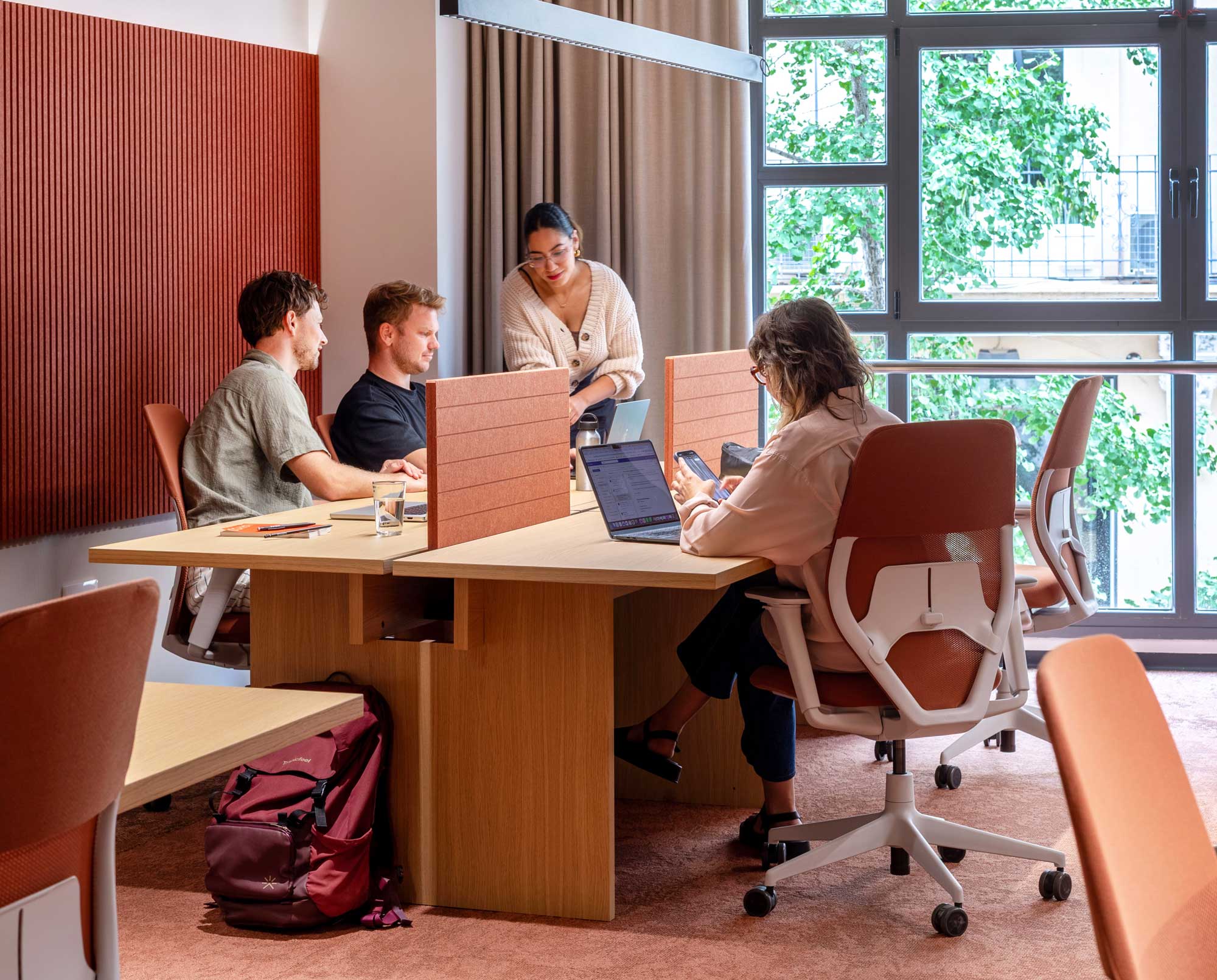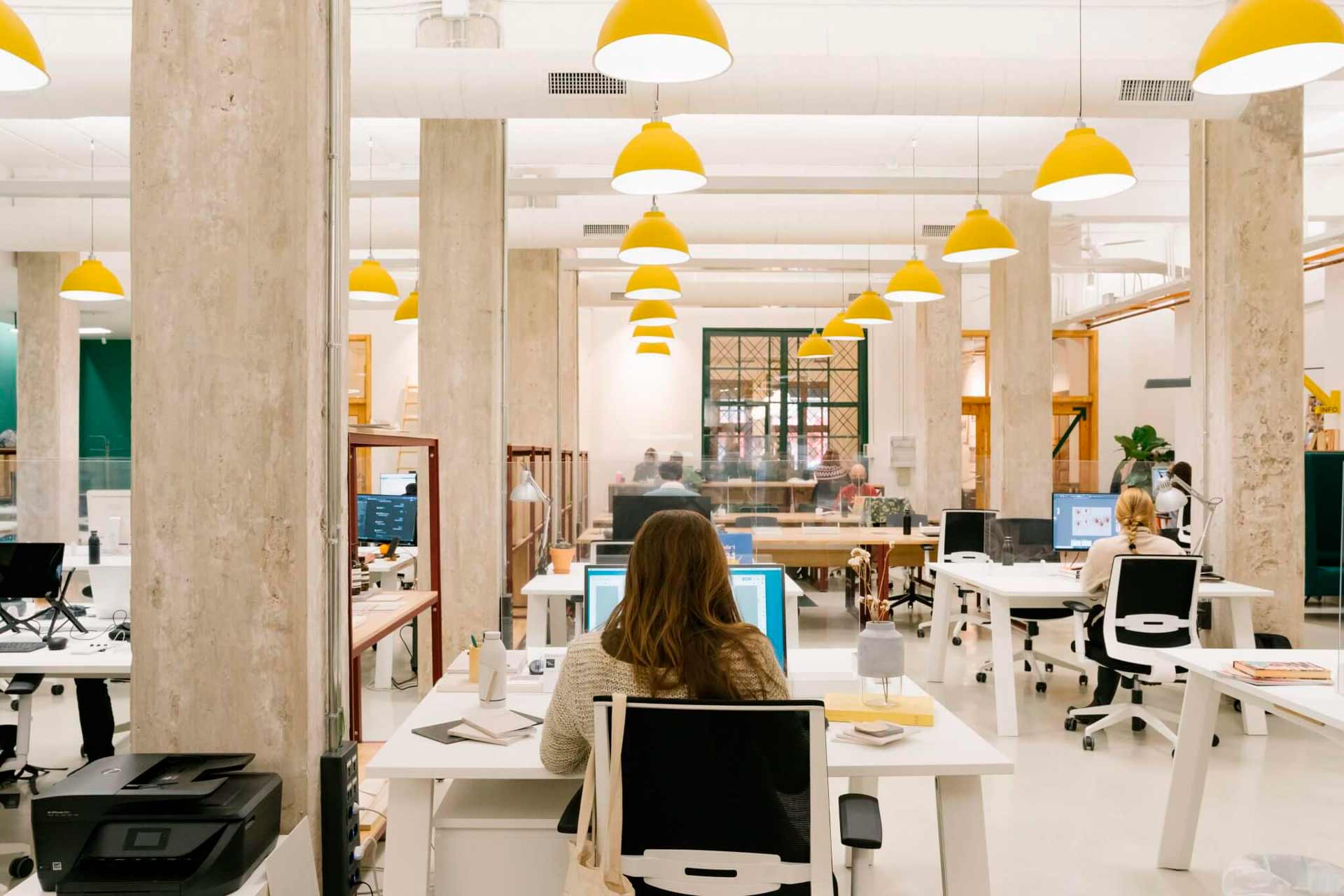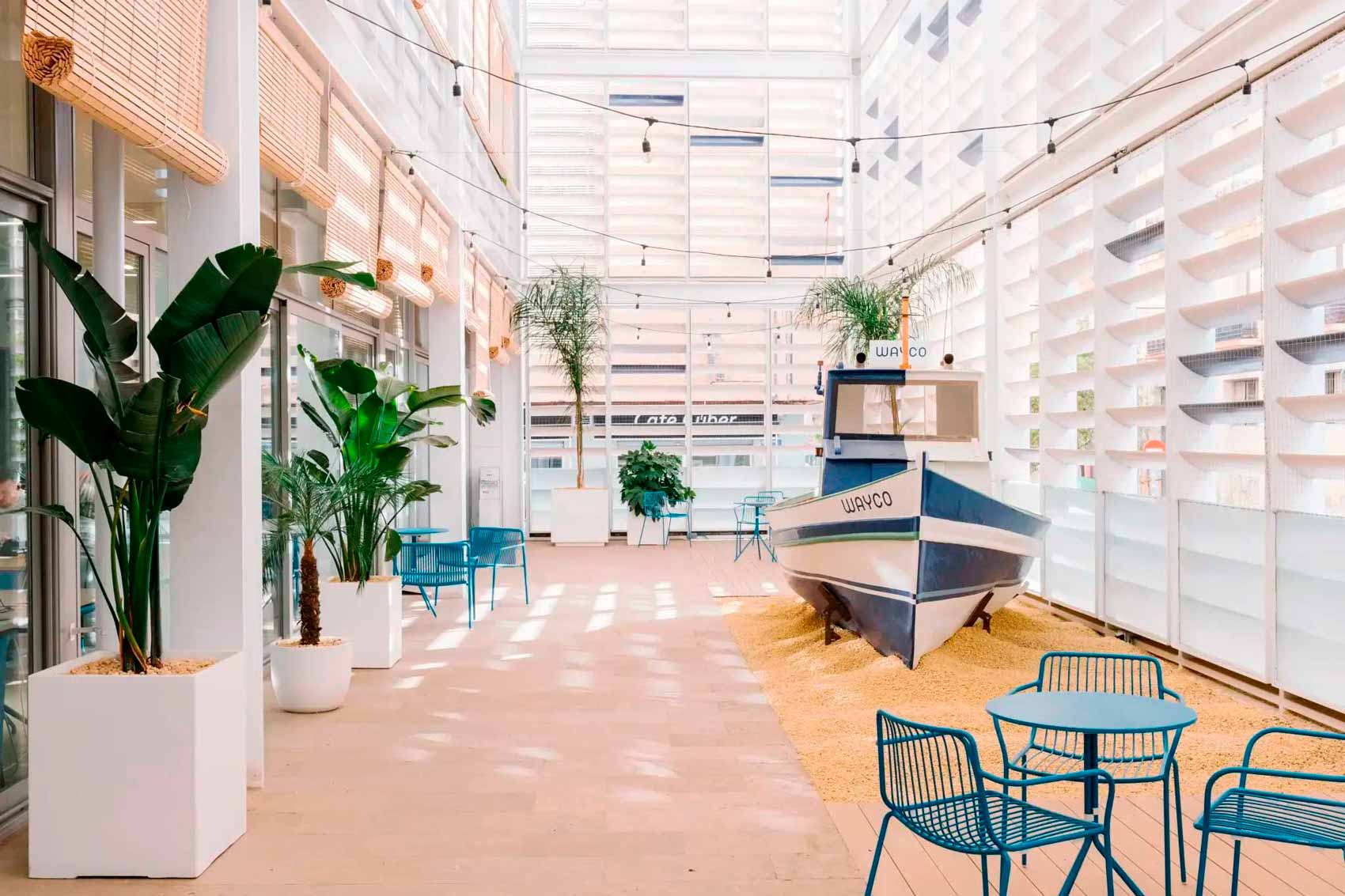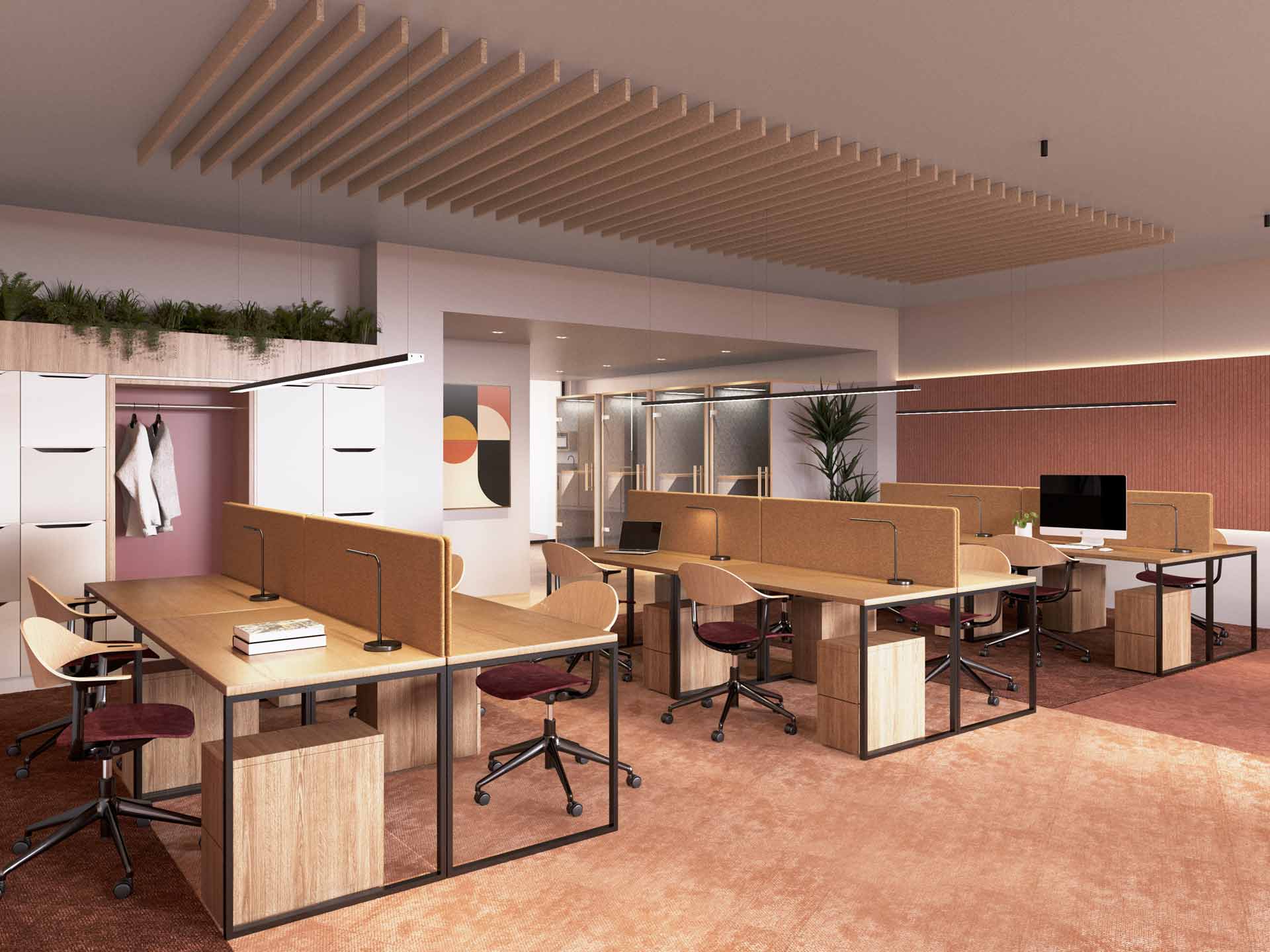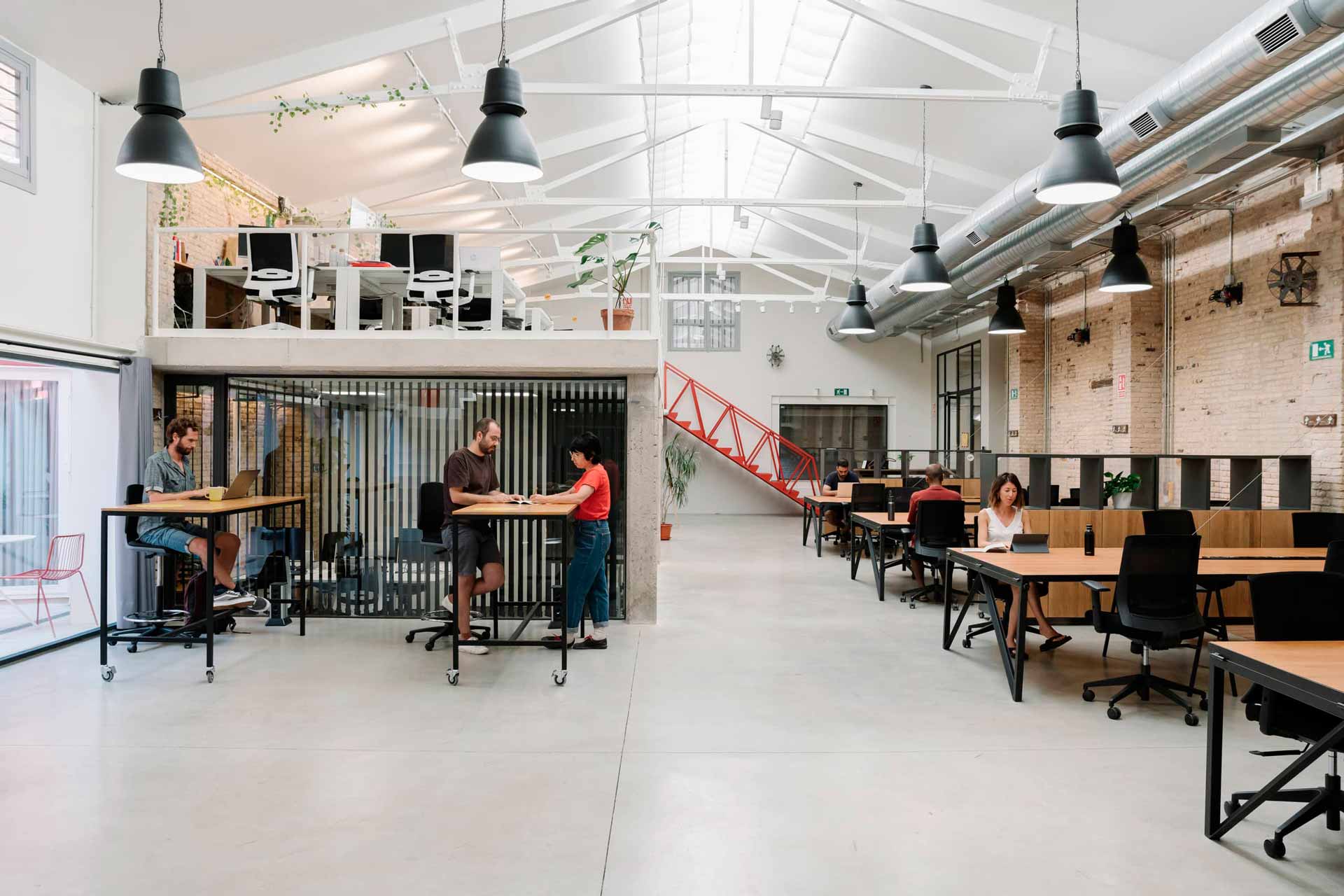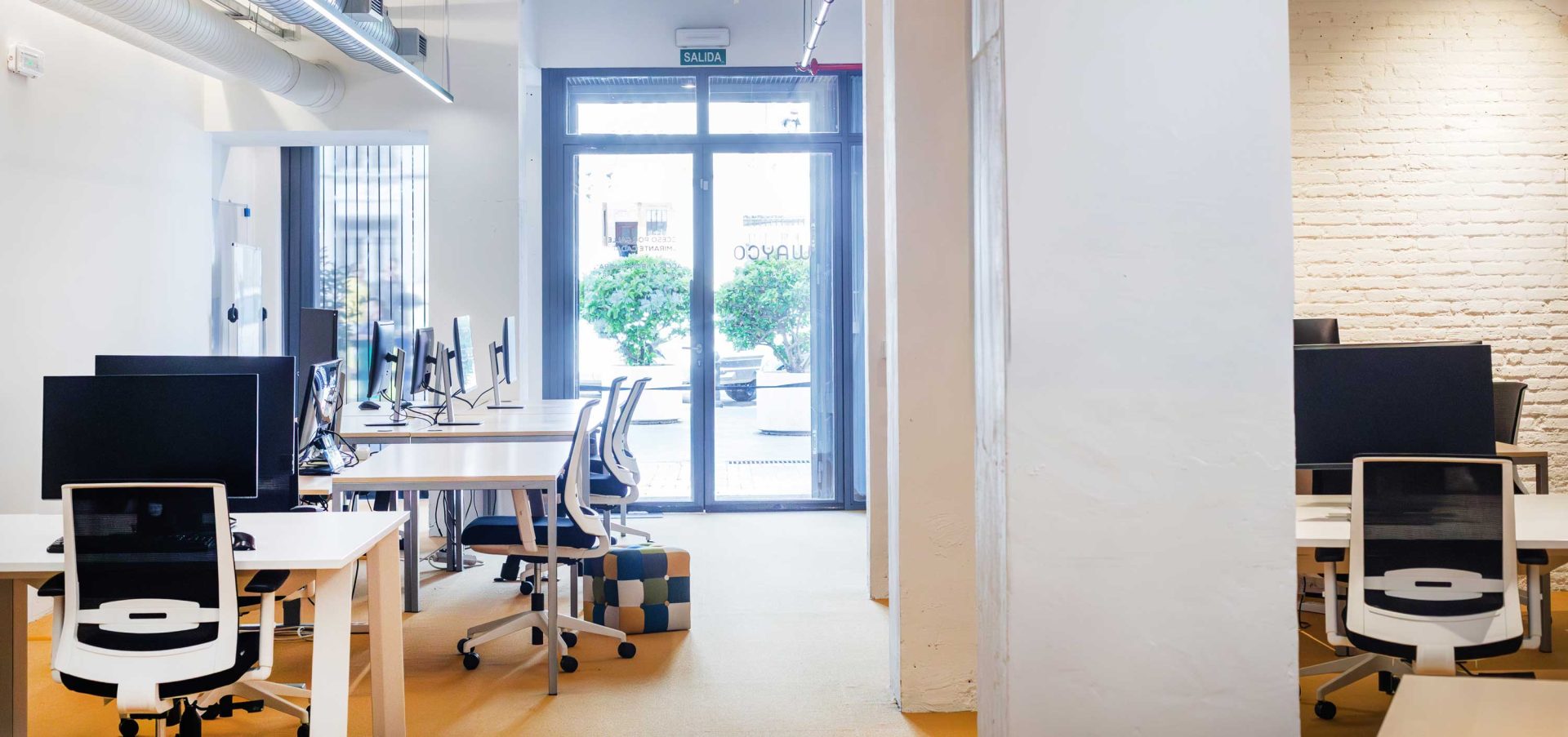
In recent years, the concept of sustainability has shifted from being a trend to becoming a genuine necessity for companies, professionals, and workspaces. Within this context, sustainable offices sustainable offices have taken centre stage, especially in the coworking ecosystem, where flexibility, community, and innovation blend with a growing environmental awareness. More and more coworking spaces in Valencia are incorporating sustainable criteria into both their design and daily management.
Yes, workspaces that not only care for the planet but also for your health, your productivity and, incidentally, your mood.
Coworking spaces have the advantage of being flexible and community‑driven, making them the perfect environment to practise sustainability in a fun and effective way. But what exactly does it mean to be sustainable, and how can we apply it without complicating our lives (or our budget)? Let’s break it down.
What Is a Sustainable Office?
It is a workspace designed, built, and managed with the aim of minimising its environmental impact, optimising resource use, and improving the wellbeing of the people who use it.
This involves applying key sustainability principles such as:
- Energy efficiency: reducing electricity consumption through LED lighting, efficient equipment, and smart systems.
- Responsible use of resources: optimising water, paper, and material consumption.
- Eco‑friendly materials: using recycled, recyclable, or low‑impact products.
- Indoor environmental quality: good ventilation, natural light, comfortable temperature, and quiet areas for concentration.
- Circular economy: everything is reused, recycled, or repurposed to avoid ending up in landfill.
In coworking spaces, these principles affect not only the infrastructure but also the culture of the space and the behaviour of its community.
Benefits of Sustainable Offices in Coworking Spaces
Adopting a sustainable approach in a coworking space not only helps protect the environment but also generates tangible advantages for both operators and users. Working in a sustainable coworking space has real benefits — and it’s not just about feeling good about your karma.
Improved Wellbeing and Productivity
One of the most immediate benefits of a sustainable office is the improvement in the quality of the working environment. Elements such as good ventilation, natural lighting, or ergonomic furniture have a direct impact on physical and mental health.
Cleaner air reduces respiratory issues and fatigue, while natural light helps regulate circadian rhythms, improving mood and concentration. Thermal and acoustic comfort also help reduce stress and increase overall satisfaction.
All of this translates into higher productivity and a much more positive working experience for coworking users.
Energy Savings and Reduced Operating Costs
Sustainability also means efficiency. Implementing smart lighting systems, proper thermal insulation, and low‑consumption equipment significantly reduces energy expenses.
In addition, energy‑management technologies make it easier to monitor consumption in real time, helping identify inefficiencies and optimise resources.
For coworking operators, this results in lower operating costs and greater medium‑ and long‑term profitability.
Stronger Brand Image and Talent Attraction
In an increasingly competitive market, having a sustainable coworking space is a key differentiator. Companies and professionals increasingly value spaces aligned with environmental and social principles.
A sustainable office conveys commitment, innovation, and responsibility, improving brand perception and attracting a more conscious user profile: green startups, committed freelancers, and sustainability‑focused companies
This approach also helps build a more cohesive community with shared values.
Key Strategies for Creating a Sustainable Office
Transforming a coworking space into a sustainable one does not necessarily require large initial investments, but rather a well‑defined strategy and gradual implementation.
Biophilic Design and Use of Natural Light
Bringing nature into the workspace is not only visually appealing — it’s functional:
- Plants everywhere (choose the ones that need the least watering).
- Wood, stone, and other natural materials.
- Layouts that allow sunlight to flow through the space.
Benefits: reduced stress, improved productivity, and energy savings by reducing artificial lighting.
Use of Recyclable and Eco‑Friendly Materials
Material choice is essential in a sustainable office. Recommended options include:
- Certified wood (FSC or PEFC).
- Eco‑friendly paints free from toxic compounds (VOCs).
- Recycled or upcycled furniture.
- Sustainable carpets and textiles.
These decisions not only reduce environmental impact but also improve indoor air quality and user health. This is what being eco‑friendly really means.
Efficient Waste Management
A sustainable coworking space knows how to sort its waste — and this is essential:
- Visible recycling points.
- Separation of paper, plastic, glass, and organic waste.
- Composting where possible.
- User education through fun signs and reminders.
The result: less waste and greater environmental awareness. If you’re part of the Wayco community, you’ve probably received a friendly reminder about using the bins correctly.
Sustainable Mobility for Users
The environmental impact of a coworking space goes beyond its walls. The journey to work can be green too:
- Parking for bikes and scooters.
- Incentives for public transport.
- Partnerships with shared‑mobility apps.
Small changes that reduce everyone’s carbon footprint.
Technology for Environmental Monitoring
Home automation and sensors aren’t just things from sci‑fi films:
- CO₂, temperature, and light sensors.
- Smart heating, cooling, and lighting systems.
- Apps to manage bookings and energy consumption.
With these gadgets, your coworking space becomes efficient, comfortable, and futuristic — without anyone having to break a sweat to keep it that way.
Examples of Sustainable Coworking Spaces
Internationally, there are many examples of coworking spaces that have integrated sustainability into their DNA.
Some stand out for their use of renewable energy, others for their eco‑friendly architecture or zero‑waste policies. Spaces in cities such as Amsterdam, Berlin, or Valencia have embraced environmental certifications, bioclimatic design, and communities committed to the environment.
These cases show that sustainability is not only viable but also profitable and highly valued by users.
Move Towards a More Responsible Working Future
Sustainable offices are no longer an option but a natural evolution of the working environment. In the coworking world, they represent an opportunity to create healthier, more efficient spaces aligned with the values of today and tomorrow.
Choosing sustainability not only improves user experience and reduces costs but also positions the coworking space as a benchmark in innovation and responsibility.
If you’re looking for a workspace that combines design, community, and environmental commitment, we invite you to discover our sustainable coworking spaces. Take the step towards a more conscious working environment and be part of the change.
Get in touch with us and come visit our spaces.