In today’s business landscape, the term “sustainability” has evolved far beyond being just another label in an annual report. It has become a driving force behind the most innovative companies. It is no longer simply about appearances, but about understanding that the long-term viability of a business depends directly on its impact on the world around it.
Today, being one of these sustainable companies is no passing trend — it is a competitive advantage. But what does that actually mean in day-to-day business life? In this article, we explain what sustainable companies are and share some inspiring examples.
What is a sustainable company?
A sustainable company is one that balances three key pillars: economic performance, social impact, and environmental responsibility. In this type of organisation, decisions are not based solely on profitability, but also on the consequences they have for people and the environment.
This translates into a more conscious way of operating, where factors such as responsible resource use, employee wellbeing, and relationships with the local community all play an important role. The focus is no longer just on the final result, but also on the process itself: how growth is achieved and what impact it creates along the way.
In practice, this means rethinking the business model beyond linear patterns of consumption and waste, moving instead towards more responsible dynamics focused on optimisation, regeneration, and care. It is not a one-off change or an isolated action, but a broader way of understanding how a company should operate.
Being sustainable means integrating this mindset into every area of the organisation: from daily operations to internal culture, as well as relationships with clients, suppliers, and the working environment itself.
When looking at successful sustainable company examples, Patagonia remains the global benchmark by a huge margin. By transferring ownership of the brand to environmental protection initiatives, the company demonstrated that radical activism can become the driving force behind a large-scale business, challenging traditional growth models and setting a new ethical standard.
Characteristics of sustainable companies
Sustainable companies share several key traits that distinguish them from traditional business models. Among the most important are:
- Efficient use of resources: optimising energy, water, and raw material consumption.
- Environmental commitment: reducing waste and emissions while investing in renewable energy.
- Social responsibility: prioritising employee wellbeing and generating a positive impact within the community.
- Transparency: clearly communicating practices and results.
- Long-term vision: prioritising sustainability over short-term profit.
These elements not only help reduce negative impact, but also strengthen brand reputation and trust.
Ejemplos de empresas sostenibles en España
Spain is home to many sustainable businesses that have successfully integrated this model into their strategy.
- Ecoalf has made the circular economy the centre of its business. The company transforms waste materials such as plastic bottles and fishing nets into high-quality fabrics, proving that fashion can be both stylish and responsible. Its model significantly reduces resource consumption and environmental impact.
- Grupo Social ONCE is a leading example of social impact. Its mission goes beyond business performance: it works to create real opportunities for people with disabilities. Through Ilunion, the organisation has built a model where inclusion is not an added feature, but the foundation of all its activity.
- Too Good To Go has developed a practical solution to a global problem: food waste. The platform connects businesses and consumers to redistribute surplus food that would otherwise be thrown away. Its concept is simple, but the impact is direct and measurable.
- La Fageda demonstrates that there are alternative ways to build a successful company. This cooperative combines food production with a strong social commitment, providing employment opportunities for people with mental health conditions while promoting local and sustainable development.
- As a major corporation, Iberdrola plays a crucial role in the energy transition. The company has invested heavily in renewable energy and emissions reduction, helping drive the shift towards a cleaner energy model on a large scale.
These examples show that profitability and commitment can go hand in hand, regardless of industry or company size.
What companies can do to become more sustainable
Adopting a sustainable business model does not require massive overnight changes. In fact, the key lies in starting with practical actions that are easy to implement and maintain over time. Real change is built through everyday habits.
Some practical measures any company can introduce include:
- Switching to LED lighting
- Establishing internal policies for turning off lights at the end of the day or when not in use.
- Installing water-saving devices on taps and checking for leaks to reduce water waste.
- Promoting responsible water usage internally.
- Reviewing and optimising heating and cooling systems.
- Implementing digital signatures for contracts and documents to reduce unnecessary printing.
- Replacing disposable bottles and cups with reusable alternatives.
- Creating visible and accessible recycling points with clear instructions for waste separation.
- Prioritising local suppliers for basic services to reduce transport emissions.
- Purchasing recycled or reusable office supplies and avoiding unnecessary stock accumulation.
Beyond individual actions, the most important thing is fostering a mindset of continuous improvement. Sustainability is not about achieving perfection immediately, but about gradually moving towards a more conscious way of operating where every decision matters.
The workspace is also part of sustainability
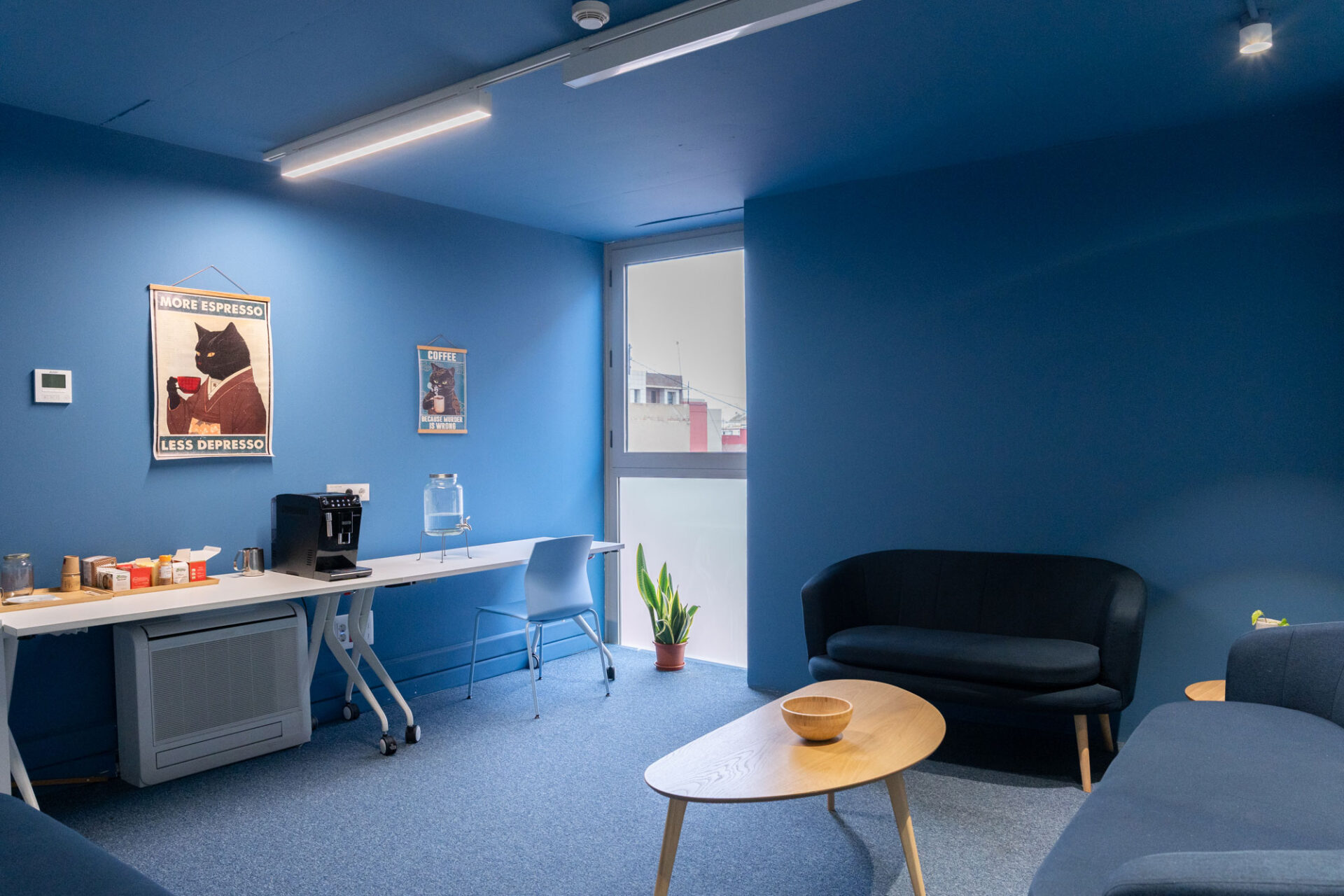
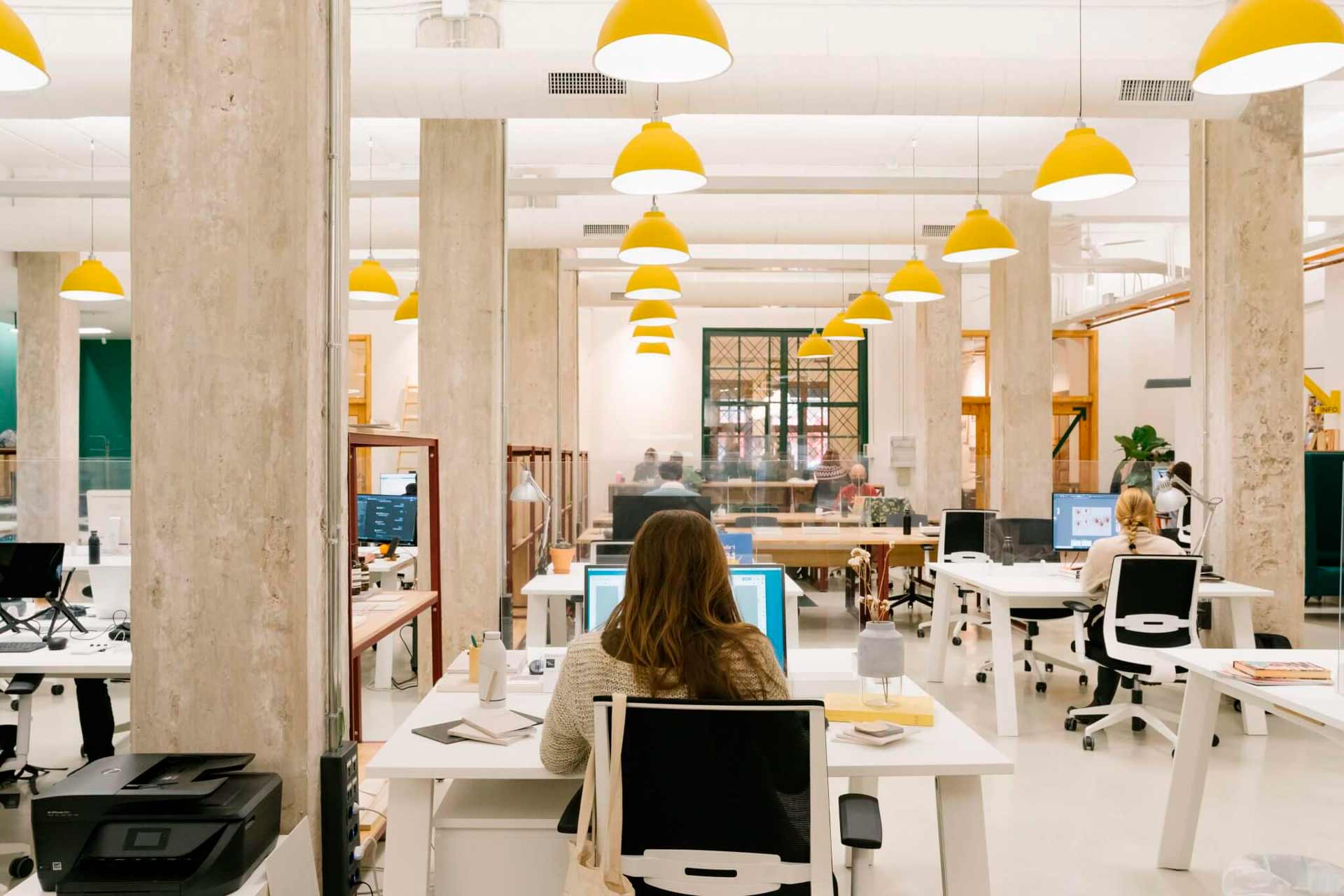
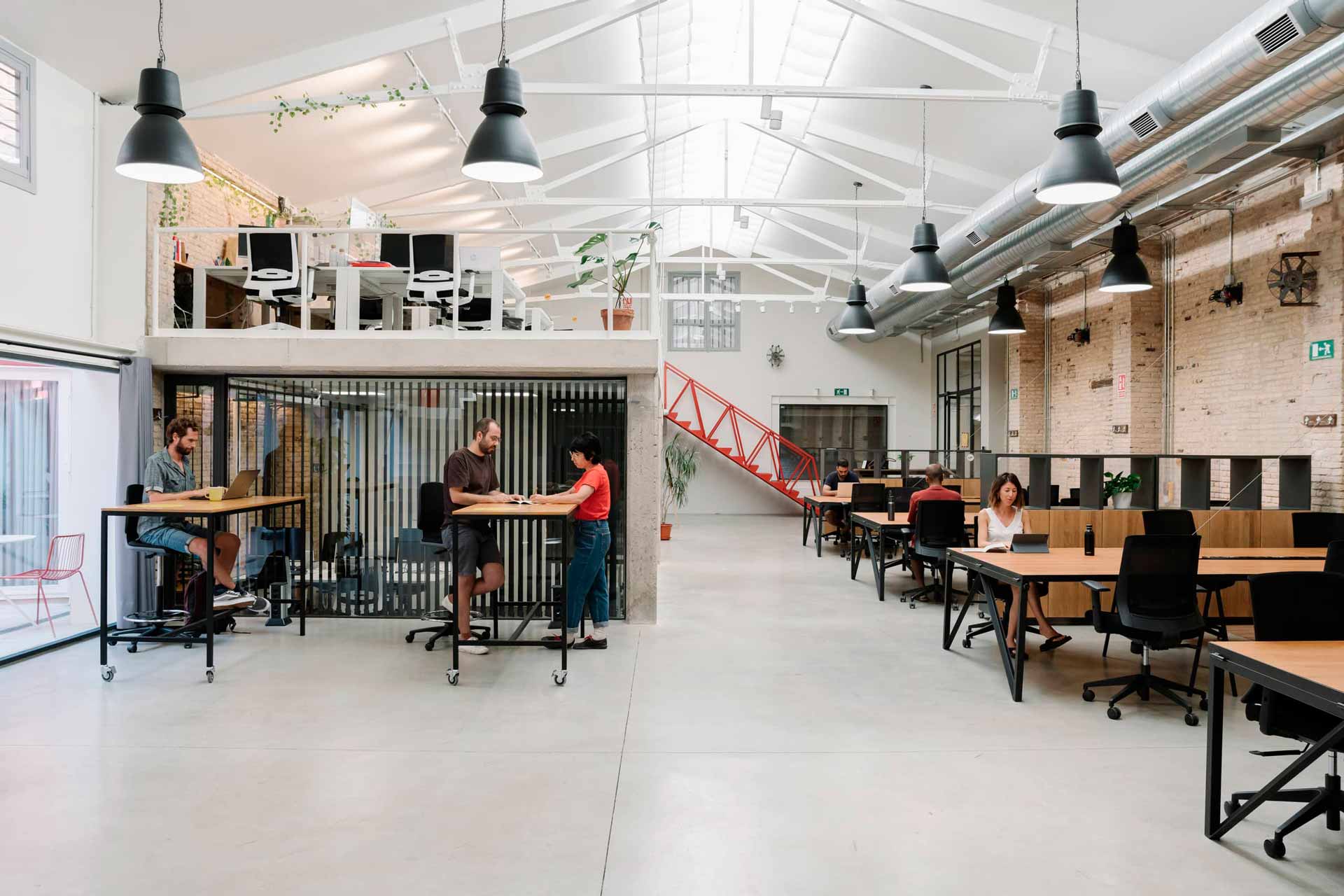
When discussing sustainability, people often focus on production or logistics, but the workspace itself also plays a crucial role. Offices directly influence energy consumption, resource use, and employee wellbeing.
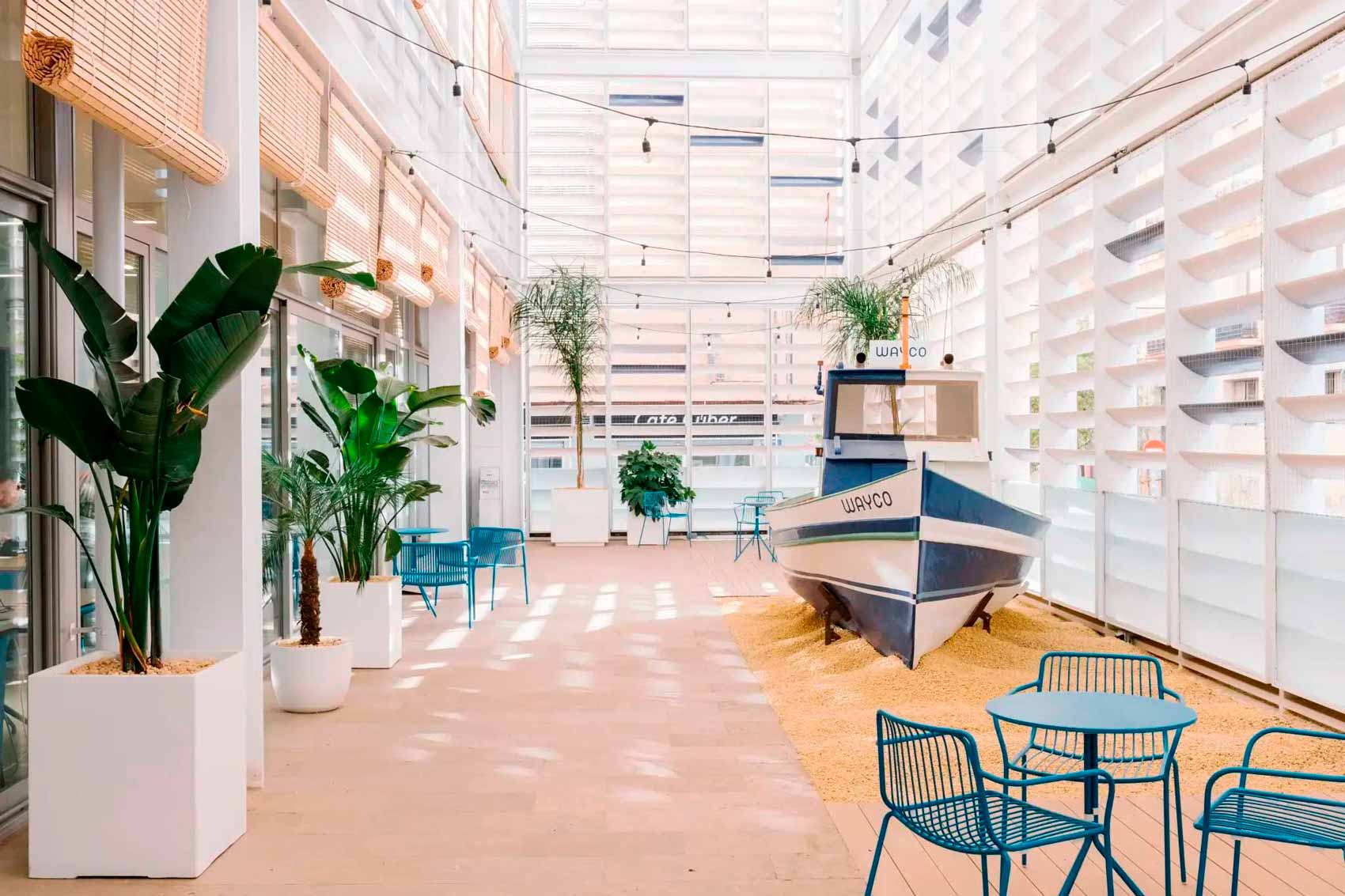
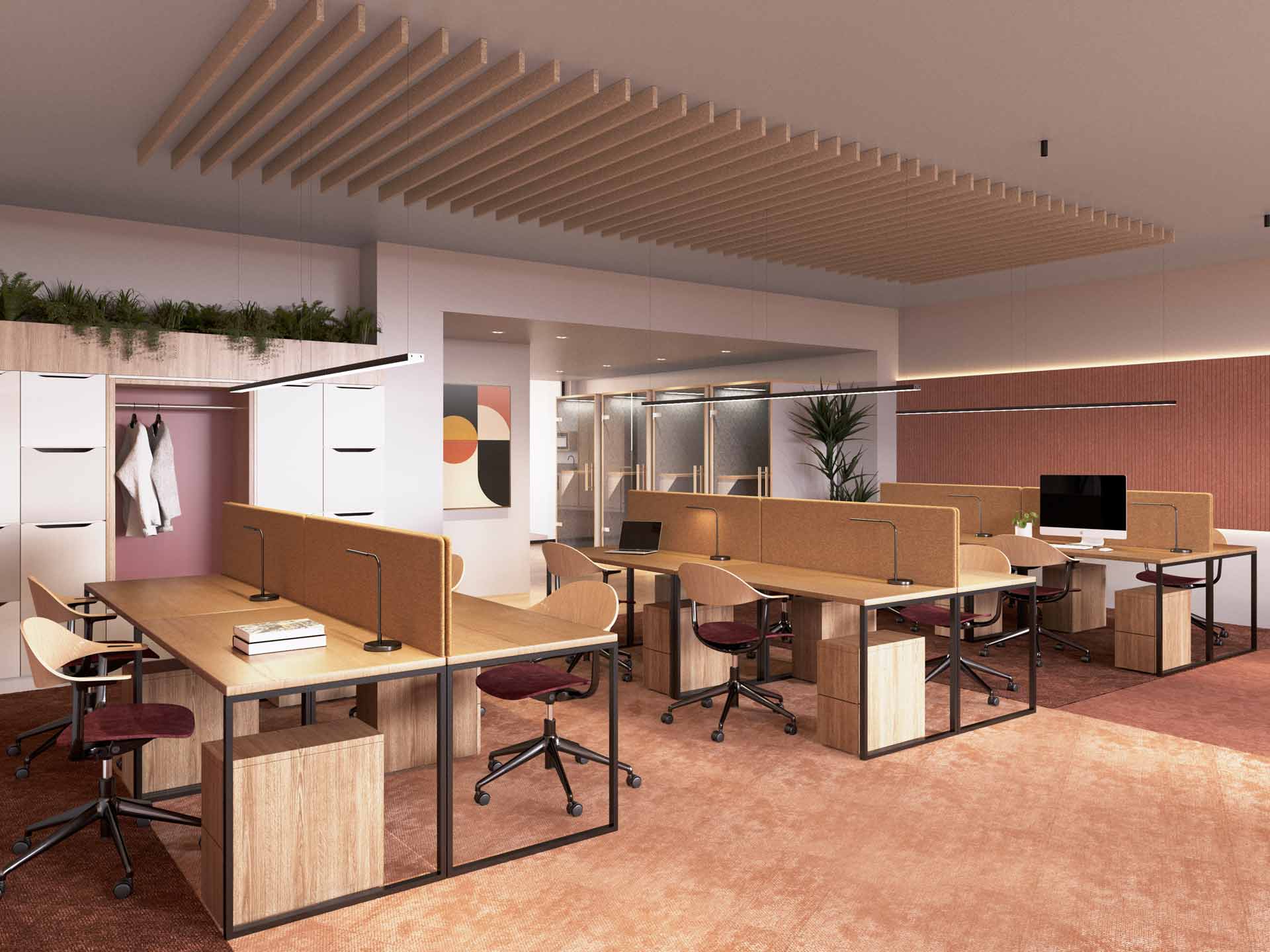
Factors such as lighting, ventilation, air conditioning, and materials can make a significant difference. Spaces that maximise natural light, incorporate efficient systems, and use responsible materials not only reduce environmental impact, but also improve the quality of the working environment. This leads to teams that are healthier, more comfortable, and more productive.
Workspace design also shapes sustainable habits by encouraging recycling, reducing unnecessary consumption, and promoting more conscious ways of working. That is why more and more companies are considering not only what they do, but also where they do it.
Coworking and sustainability: a more efficient alternative
In this context, coworking has become one of the most efficient ways to rethink the workplace. Sharing infrastructure allows resources to be used more effectively, reduces energy consumption, and avoids the underused office spaces so common in traditional workplaces.
In addition, many coworking spaces are designed with sustainability already built in. It is not an extra feature — it is part of the concept itself: efficient lighting, smart climate control, responsible materials, and waste management systems are integrated into daily operations. The goal is clear: minimise environmental impact without sacrificing comfort or quality.
But the value of coworking goes beyond the physical space. It also transforms working culture by encouraging more conscious and collaborative habits. Sharing a workspace with other professionals promotes smarter resource use and more responsible ways of working.
Choosing a coworking space in Valencia means embracing a more flexible and connected way of working, while naturally incorporating sustainable practices without the complexity or costs associated with a traditional office.
How to start becoming a more sustainable company
Moving towards a more sustainable business model does not have to be difficult or immediate. The key is to approach it as a gradual process that becomes naturally integrated into the company’s day-to-day operations over time.
A simple roadmap can help guide the process: first, analyse your current situation to understand where you stand; then set realistic short- and medium-term goals; and involve your team so sustainability becomes a shared commitment rather than an isolated initiative. From there, introduce progressive changes, measure results, and make adjustments as needed to continue improving.
Adopting this approach not only helps reduce environmental impact, but also strengthens your company’s positioning among clients, talent, and investors, who are increasingly committed to responsible business models. Sustainable business practices are already part of the present — and spaces like Wayco help make this transition easier through flexible, collaborative, and conscious working environments.
If you would like to take the first step towards a more sustainable workspace, get in touch with us.